Key takeaways
- Compare three commercial riding mowers for large properties and daily work, from wide gas zero-turns to a battery model, and find the right deck and drive.
A commercial riding mower is a working machine, not a convenience, so it comes down to how much ground you cover, how often you cut, and what your land throws at the deck. Too small a mower turns a two-hour route into an all-day job, while a machine built for open acreage becomes a liability on a property full of trees, beds, and tight corners. Deck width, engine stamina, transmission strength, and fuel or battery range all pull in different directions, and the right balance depends on the property, not the badge on the hood.
This guide is for property owners, small landscaping crews, and anyone maintaining several acres who needs a mower that runs for hours without fading. The three mowers below were chosen from their Amazon listing names and specifications: two wide gas zero-turns from Husqvarna for heavy cutting, and one battery-powered EGO zero-turn for those who want to leave gasoline behind. Each suits a different workload, and the sections that follow explain how to tell them apart.
Quick Picks
As an Amazon Associate we earn from qualifying purchases.
| Product | Best for | Key spec from title |
|---|---|---|
| Husqvarna MZ61 61-Inch Zero Turn Riding Mower | Widest cuts on large properties and light commercial work | 61-inch deck, 24 HP Kawasaki engine |
| Husqvarna Z254F 54-Inch Zero Turn Riding Mower | Heavy daily mowing on multi-acre lawns | 54-inch deck, 23 HP Kawasaki engine |
| EGO POWER+ Z6 ZT4214L 42-Inch Zero Turn Riding Mower | Battery-only mowing without gasoline or exhaust | 42-inch deck, six 56V 6.0Ah batteries |
How to Choose
Deck width and deck construction
Deck width decides how many passes a property takes, and deck construction decides how long the mower survives rough ground. A 61-inch deck clears open acreage far faster than a 42-inch deck, but it also needs wider gates, more trailer space, and more room to turn around beds and trees. Fabricated decks, built from welded steel plate, hold up better than stamped decks when the blades meet roots, rocks, and uneven turf, which is why both Husqvarna models here use fabricated decks. Measure your narrowest gate and your tightest turn before choosing the widest deck on the shelf, and remember that a deck that cannot reach part of the lawn is not saving time.
Engine power and transmission strength
Engine power keeps blade speed up in thick or damp grass, and the transmission is what carries that power to the wheels hour after hour. Both gas mowers in this guide use Kawasaki V-twin engines, which are a common choice for commercial-duty cutting because they hold torque under load rather than bogging down in tall growth. Just as important is the hydrostatic transmission: the MZ61 uses a Hydro Gear ZT-3100 commercial-grade unit, built for sustained use, while the Z254F uses hydrostatic transaxles suited to steady residential and light commercial work. If the mower will run for hours most days of the week, transmission grade matters as much as horsepower.
Gasoline or battery power
Gasoline mowers refuel in minutes and run as long as the tank holds out, which suits crews covering several properties in a day. The MZ61 carries five gallons of fuel and the Z254F carries three and a half, so a gas machine can finish a large route without a mid-day stop. Battery mowers like the EGO Z6 trade that range for quiet operation, no gasoline handling, and no engine oil or spark plug maintenance, with six 56V batteries covering up to one and a half acres per charge. Count your acres honestly before going battery-only, and check whether spare batteries and a fast charger fit the way your crew actually works.
Operator comfort and day-long control
A commercial mower earns its keep across long sessions, so seat support, control layout, and cutting-height adjustment shape the working day more than any single specification. High-back seats with armrests reduce fatigue on rough ground, and a spring-assisted or foot-operated deck lift makes height changes quick when moving between lawn sections. Zero-turn lap-bar steering turns tightly around obstacles but takes practice, especially on slopes, so anyone new to the format should spend time on flat, open ground first. Sit on the machine, work the levers, and adjust the deck before committing, because comfort problems only grow louder after the third hour.
The 3 Best Options
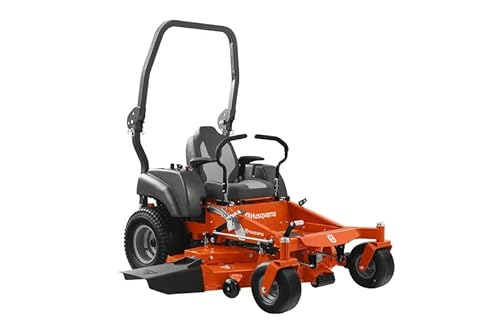
Husqvarna MZ61 61-Inch Zero Turn Riding Mower
The MZ61 is the widest and most work-focused mower in this guide, built for owners and small crews who cut large properties and light commercial sites. Its 61-inch fabricated deck covers open ground in fewer passes, and the commercial-grade transmission is made for repeated long sessions rather than occasional weekend use. Rollover protection comes standard, which matters on uneven land, and the five-gallon tank keeps the machine running through extended routes. This is the pick when acreage is the main problem and the mower needs to keep pace with it.
Specs
- 61-inch cutting width with a heavy-duty 11-gauge steel fabricated deck
- 24 HP Kawasaki FR730V V-twin engine, 726 cc
- Hydro Gear ZT-3100 commercial-grade hydrostatic transmission
- Gasoline power source with a 5-gallon fuel capacity
- Rollover protection structure (ROPS) standard
- Cutting height range of 1.5 to 4.5 inches
- Item weight of 844 pounds; dimensions 76 inches deep by 76 inches wide by 42 inches high
- 4-year consumer warranty
Best for: Large properties and light commercial routes where a wide deck and long run time matter most.
Watch out for: Confirm freight delivery arrangements before ordering, because an 844-pound mower needs a loading dock, a ramp, or equipment to unload safely.
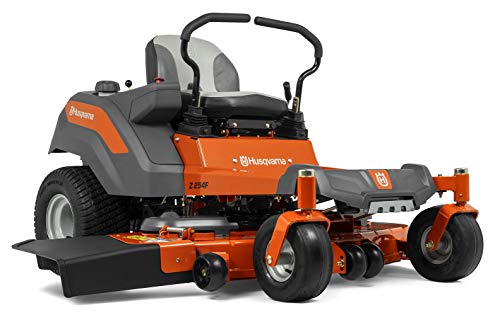
Husqvarna Z254F 54-Inch Zero Turn Riding Mower
The Z254F sits one step below the MZ61 in size but keeps the same working character, making it a strong fit for multi-acre lawns that mix open stretches with trees, beds, and tighter corners. Its 54-inch ClearCut fabricated deck is built from 10-gauge steel, and the 23 HP Kawasaki engine holds cutting speed in thick grass without the bulk of the larger machine. A top forward speed of 6.5 mph keeps routes moving, and the three-and-a-half-gallon tank covers a solid session before refuelling. Choose this one when the property is large but not wide open.
Specs
- 54-inch ClearCut fabricated deck made from 10-gauge steel
- 23 HP Kawasaki FR691V V-twin engine, 726 cc
- Hydrostatic transaxles with zero-turn drive
- 3.5-gallon fuel tank capacity
- Cutting height range of 1.5 to 4 inches with 3 blades
- Maximum forward speed of 6.5 mph
- Item weight of 640 pounds
Best for: Multi-acre lawns with a mix of open ground and obstacles, where a 54-inch deck balances speed and manoeuvrability.
Watch out for: Check the engine serial and model year against any open Kawasaki FR691V recall notices before first use, since a 2023 recall covered some engines in this family.
EGO POWER+ Z6 ZT4214L 42-Inch Zero Turn Riding Mower

The EGO Z6 is the battery-powered option in this guide, and it suits owners who want commercial-style zero-turn handling without gasoline, exhaust, or engine maintenance. Six 56V batteries and an 880W charger come in the box, and the mower covers up to one and a half acres on a single charge, with power equivalent to a 24-horsepower gas engine. Its 42-inch deck is the narrowest here, which helps on properties with gates and tight turns, and the quieter operation suits early starts near neighbours. This is the pick for smaller commercial jobs where clean, quiet running matters.
Specs
- 42-inch cutting deck
- Six 56V 6.0Ah batteries included, with an 880W charger
- Covers up to 1.5 acres per charge
- Power equivalent to a 24-horsepower gas engine
- Peak Power Technology combining the included batteries
- Model number ZT4214L
Best for: Battery-only mowing on properties up to about one and a half acres, especially where quiet operation and no gasoline handling are priorities.
Watch out for: Confirm how many spare batteries and what charging setup the job needs, because the stated coverage depends on grass height, density, and terrain.
Which One Fits Your Situation
Cutting several open acres every week
The Husqvarna MZ61 fits this workload best, because its 61-inch deck finishes wide ground in fewer passes and its commercial-grade transmission is built for repeated long sessions. The five-gallon tank supports extended routes without refuelling stops, and the standard rollover protection adds a margin of safety on uneven land. Accept the larger footprint and heavier frame as the trade for that pace, and plan trailer space around its 76-inch width.
Mowing a large lawn with trees, beds, and corners
The Husqvarna Z254F is the better match when the property mixes open stretches with obstacles. Its 54-inch deck is wide enough to keep routes efficient but narrow enough to work around plantings and through standard gates more easily than the 61-inch MZ61. The 23 HP Kawasaki engine keeps blade speed up in thick patches, and the 6.5 mph top speed keeps the job moving between sections.
Running a quiet, gasoline-free mowing routine
The EGO POWER+ Z6 ZT4214L suits owners and crews who want to stop handling gasoline and engine maintenance altogether. Its six-battery kit covers up to one and a half acres per charge, and the quieter electric drive allows early morning starts without disturbing neighbours. Keep the property inside its stated coverage and have a charging plan ready, and it handles regular mowing with far less upkeep than a gas machine.
Starting a small mowing crew on a budget of space
The EGO Z6 also fits a new crew working smaller properties, since its 42-inch deck fits through gates and onto smaller trailers that a 61-inch machine cannot use. Battery power removes fuel storage and oil changes from the daily routine, which simplifies the start of the working day. As the route grows past its per-charge coverage, the Husqvarna Z254F becomes the natural next step up in width and range.
Safety Before You Mow
Riding mowers are powerful machines, and safe use starts before the blades engage. Read the operator manual for the exact model, walk the cutting area to remove rocks, branches, and debris, and keep children and bystanders clear of the mowing area at all times. Keep the rollover protection structure raised and wear the seat belt where the mower is fitted with them, and never carry passengers on a riding mower. Mow up and down gentle slopes rather than across them where the manual directs, and slow down on wet grass and uneven ground. For gasoline models, refuel outdoors with the engine off and cool, and store fuel in an approved container away from ignition sources; for battery models, charge only with the supplied charger and keep batteries dry and undamaged. Stop the blades and switch the mower off before clearing the deck or stepping away from the seat.
Common Mistakes
- Buying the widest deck available without measuring gates, trailer width, and the tightest turns on the property.
- Choosing a mower by engine horsepower alone while ignoring transmission grade, which decides how the machine holds up under daily hours.
- Picking a battery mower for acreage beyond its per-charge coverage and then running out of power mid-route.
- Skipping the walk-through of the cutting area, so hidden rocks and branches damage blades and the deck.
- Ordering a machine weighing several hundred pounds without arranging freight delivery, unloading help, and storage space first.
Frequently Asked Questions
What size deck does a commercial riding mower need?
Deck size follows the property, not the buyer. A 61-inch deck suits wide open acreage where fewer passes save real time, a 54-inch deck balances speed with access around trees and beds, and a 42-inch deck fits gated properties and smaller routes. Measure the narrowest gate and the tightest corner before choosing, because a deck that cannot reach part of the lawn adds work rather than saving it.
Are zero-turn mowers good for commercial work?
Zero-turn mowers suit commercial work well on properties with room to turn, because lap-bar steering lets the operator pivot tightly around trees, beds, and fences without reversing. They take practice to handle smoothly, especially on slopes, and they need open space to use their turning advantage. For long straight runs and gentle terrain, their speed and manoeuvrability make them a strong choice for crews.
How much land can a battery riding mower cover per charge?
Coverage depends on the battery kit, grass height, and terrain, so treat the listed figure as a guide for average conditions. The EGO Z6 in this guide covers up to one and a half acres per charge with its six included 56V batteries. Thick, tall, or wet grass drains batteries faster, so owners with heavy growth should plan for spare batteries or a smaller area per session.
Do commercial riding mowers need much maintenance?
Gas mowers need regular oil changes, air filter checks, blade sharpening, and fuel system care, with the exact intervals set out in the operator manual. Battery mowers remove oil and fuel work but still need blade care, deck cleaning, and battery storage in dry conditions. Either way, keeping the deck clear of packed grass and checking tyre pressure and belt condition keeps the cut even and the machine reliable.