Our Short List of 3

- Type: Lithium iron phosphate deep-cycle battery, 12.8 volt
- Capacity: 100 amp hours, Group 31 case
- Weight: 24.25 pounds per the listing
- Protection: Built-in 100 amp battery management system

- Type: Deep-cycle AGM lead-acid battery, 12 volt
- Capacity: 100 amp hours
- Max discharge: 1,100 amps for five seconds per the maker
- Self-discharge: Below 3 percent per month per the maker

- Type: Deep-cycle AGM lead-acid battery, 12 volt
- Capacity: 100 amp hours, Group 31 case
- Max discharge: 1,150 amps for five seconds per the maker
- Warranty: One year per the maker
All 4 Picks at a Glance
| Product | Specs | Action |
|---|---|---|
| Best lithium pick: LiTime 12V 100Ah LiFePO4 Battery, Group 31 |
| Check price on Amazon |
| Best drop-in AGM pick: Renogy 12 Volt 100Ah Deep Cycle AGM Battery |
| Check price on Amazon |
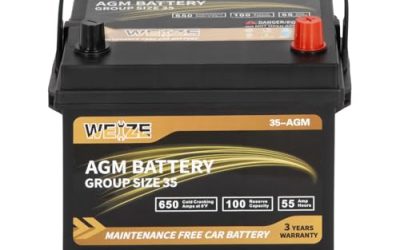
| Best value AGM pick: WEIZE 12V 100Ah Deep Cycle AGM Battery, Group 31 |
| Check price on Amazon |
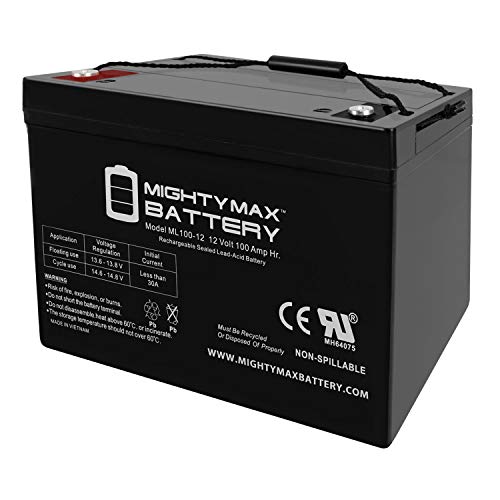 Best smaller-case AGM pick: Mighty Max ML100-12 |
| Check price on Amazon |
Key takeaways
- Compare the best house batteries for RV use from LiTime, Renogy, WEIZE and Mighty Max by chemistry, capacity, weight, group size and charger needs.
As an Amazon Associate we earn from qualifying purchases.
Affiliate Disclosure: This article contains affiliate links. If you buy through a link on this page, we may earn a commission at no extra cost to you.
The short answer
The best house batteries for RV use fall into two camps. If you want the most usable power for the weight and you are ready to confirm that your converter charger has a lithium profile, the LiTime 12V 100Ah LiFePO4 battery is the strongest pick here: a Group 31 lithium iron phosphate battery with a built-in 100 amp battery management system, at roughly a third of the weight of a comparable lead-acid battery. If you want a drop-in replacement that works with the charger already in your rig, the Renogy 12 Volt 100Ah Deep Cycle AGM Battery is the proven choice, with a sealed maintenance-free case and a low self-discharge rate. The WEIZE 12V 100Ah Deep Cycle AGM Battery offers the same Group 31 AGM format as a value alternative, and the Mighty Max ML100-12 gives you a smaller Group 27 sealed AGM case for tighter battery boxes.
All four are 12 volt deep-cycle house batteries. None of them is a starting battery, and none belongs under the hood. A house battery’s job is the opposite of a starter battery’s job: slow, steady discharge over hours, then a full recharge, repeated for seasons. Choosing well means matching chemistry, usable capacity, physical size and charging equipment to how you actually camp.
Quick comparison
| Pick | Chemistry | Capacity | Best for |
|---|---|---|---|
| LiTime 12V 100Ah LiFePO4, Group 31 | Lithium iron phosphate | 100 amp hours | Most usable power, lightest bank |
| Renogy 12 Volt 100Ah Deep Cycle AGM | AGM lead-acid | 100 amp hours | Drop-in replacement, proven AGM |
| WEIZE 12V 100Ah Deep Cycle AGM, Group 31 | AGM lead-acid | 100 amp hours | Value AGM in a Group 31 case |
| Mighty Max ML100-12 | Sealed AGM lead-acid | 100 amp hours | Smaller Group 27 battery boxes |
How we chose these RV house batteries
We limited this guide to true deep-cycle batteries sold on Amazon US in the sizes RV battery boxes are built around, and to two chemistries that cover almost every real buying decision: lithium iron phosphate and absorbed glass mat lead-acid. We excluded starting batteries and dual-purpose marine cranking batteries, because their thin plates are not built for repeated deep discharge. We excluded flooded batteries that need watering, not because they are poor performers, but because most RV owners asking this question want a sealed battery they can mount in a compartment and check occasionally rather than service monthly.
For each pick we recorded the specifications the maker or listing states: voltage, capacity, group size, weight, dimensions, maximum discharge current and self-discharge rate where published. We did not test these batteries ourselves, and no runtime figure here is a practical measurement.
Usable capacity is the single most important idea in this guide. A lead-acid house battery should not routinely be discharged below about half of its rated capacity if you want it to last, so a 100 amp hour AGM battery offers roughly 50 usable amp hours in daily service. A lithium iron phosphate battery can be discharged far more deeply as a matter of routine, so the same 100 amp hour rating delivers close to its full capacity. Two batteries with the same number on the label are not the same size bank.
Best lithium pick: LiTime 12V 100Ah LiFePO4 Battery, Group 31
- Type: Lithium iron phosphate deep-cycle battery, 12.8 volt
- Capacity: 100 amp hours, Group 31 case
- Weight: 24.25 pounds per the listing
- Protection: Built-in 100 amp battery management system
The LiTime 12V 100Ah is the battery for the RV owner who is tired of doing capacity maths with one hand tied. Its nominal voltage is 12.8 volts, its rated capacity is 100 amp hours, which works out to 1,280 watt hours of stored energy, and the listing states a built-in 100 amp battery management system, a maximum continuous discharge current of 100 amps and a peak discharge current of 280 amps for five seconds. The case is Group 31 size, at 13 by 6.77 by 8.43 inches, with M8 terminals, and it weighs 24.25 pounds. That weight figure is the one that stops people mid-sentence: it is less than half the weight of any lead-acid pick in this guide, which matters when the battery box sits ahead of the axle or when you carry the battery in and out for winter storage.
LiTime states a recommended charging voltage of 14.4 volts, plus or minus 0.2 volts, and a recommended charging current of 20 amps, at which a full recharge takes about five hours. The maker describes the battery as suitable for RVs, travel trailers, solar systems, off-grid use and home backup, and states that banks can be expanded in parallel and series configurations for larger systems. Cycle life claims for lithium iron phosphate batteries are far higher than for lead-acid, and the listing for this model has carried figures in the thousands of deep cycles; treat the exact number as a maker claim that depends on depth of discharge and temperature, not as a promise about your specific rig.
Two checks decide whether this battery is right for you. First, your charging sources. An older converter charger with a fixed lead-acid profile may never bring a lithium battery to a full charge, and a lithium-specific profile or a charger upgrade is often part of the real project. Solar charge controllers and DC-to-DC chargers need the same check. Second, cold weather. Lithium iron phosphate batteries should not be charged below freezing unless the model includes low-temperature charging protection or heating, so check the current listing’s specification for this exact model if you camp in winter or store the rig in an unheated space. Discharge in the cold is a different matter from charging in the cold, and confusing the two is a common and expensive mistake.
Best drop-in AGM pick: Renogy 12 Volt 100Ah Deep Cycle AGM Battery
- Type: Deep-cycle AGM lead-acid battery, 12 volt
- Capacity: 100 amp hours
- Max discharge: 1,100 amps for five seconds per the maker
- Self-discharge: Below 3 percent per month per the maker
The Renogy 100Ah AGM is the battery to buy when you want to change the battery and nothing else. It is a sealed lead-acid battery with absorbed glass mat construction, a nominal 12 volts and 100 amp hours of capacity, and it works with the converter charger already fitted in most RVs. Renogy states a maximum discharge current of 1,100 amps for five seconds, a monthly self-discharge rate below 3 percent at room temperature, and an operating discharge range from minus 20 to 60 degrees Celsius. The battery measures 13.1 by 6.9 by 8.6 inches and weighs 63.9 pounds per the maker’s comparison table, with M8 terminal bolts included.
Renogy states that these batteries support parallel connections up to four batteries and series connections without a stated limit, and that all batteries in a bank should share the same capacity, voltage, chemistry and ideally brand. The maker also advises against discharging below half capacity if you want to protect cycle life, and recommends storing the battery fully charged and recharging it every three months in storage. Those two instructions, followed honestly, are most of what separates an AGM bank that lasts for years from one that fades in its second season.
Renogy states that more than 230,000 of its AGM batteries have been sold worldwide over the past six years, and the listing carries a large body of owner reviews, including reports from RV owners running pairs in fifth wheels and camper vans. Choose the Renogy if your charger has no lithium profile or you camp in serious cold: you carry more than twice the LiTime’s weight for about half the usable capacity, and in exchange you get a battery that asks nothing of the rest of your electrical system.
Best value AGM pick: WEIZE 12V 100Ah Deep Cycle AGM Battery, Group 31
- Type: Deep-cycle AGM lead-acid battery, 12 volt
- Capacity: 100 amp hours, Group 31 case
- Max discharge: 1,150 amps for five seconds per the maker
- Warranty: One year per the maker
The WEIZE 100Ah AGM gives you the same basic specification as the Renogy in the same Group 31 footprint, and it is the pick for a buyer whose priority is a serviceable sealed house battery at the lowest outlay in this guide. The maker describes a 12 volt, 100 amp hour sealed lead-acid AGM battery measuring about 13 by 6.7 by 8.4 inches, with a 3 percent self-discharge rate and a maximum discharge current of 1,150 amps for five seconds. WEIZE positions it for trolling motors, RVs, solar systems, marine use, camping and off-grid applications, and lists a one-year warranty.
In daily RV service, expect the same rules as any AGM battery: roughly half the rated capacity is your working budget if you want the battery to last, recharge fully after every trip, and do not leave it sitting discharged. A pair of these in parallel is a common budget bank for a travel trailer that runs lights, a water pump, phone charging, a fan and a modest inverter load, and the Group 31 case means the pair fits the double battery boxes and trays sold for exactly this purpose.
The honest difference from the Renogy is support depth: Renogy publishes fuller specifications and system documentation, because it sells complete solar systems around its batteries, while WEIZE sells a battery. If your rig is a battery, a charger and a set of loads, that may be all you need.
Best smaller-case AGM pick: Mighty Max ML100-12
- Type: Sealed AGM lead-acid battery, 12 volt
- Capacity: 100 amp hours, Group 27 case
- Dimensions: 12.09 by 6.65 by 8.48 inches per the maker
- Terminals: Internal thread
The Mighty Max ML100-12 solves a fit problem the other three cannot. It is a 12 volt, 100 amp hour sealed lead-acid AGM battery in a Group 27 case measuring 12.09 by 6.65 by 8.48 inches, which is noticeably shorter than a Group 31 battery. Many smaller travel trailers, teardrops and older rigs have a battery box or a compartment dimensioned for Group 24 or Group 27 batteries, and a Group 31 battery simply does not go in. The ML100-12 gives those owners a full 100 amp hour rating in the smaller case, with internal thread terminals rather than posts.
The maker describes the battery as UL certified, maintenance free, rechargeable, able to be mounted in any position, and resistant to shock and vibration, with a service range spanning very low and very high temperatures. It is sold as the battery and screws only, with no wire harness or mounting accessories included, so budget for cables and a hold-down if your installation needs them. Mighty Max positions the model for solar arrays, backup power and deep-cycle service generally, and it carries a one-year warranty per the maker’s materials.
As with the other AGM picks, plan around half the rated capacity as your daily working budget, keep it on a maintainer in storage, and remember that a smaller case does not mean a light battery: a 100 amp hour lead-acid battery is a heavy object in any group size, so lift it with help and secure it properly before towing. A loose house battery in a front compartment is a hazard to the battery, the compartment and everything wired to it.
Lithium or AGM: the decision that actually matters
Chemistry decides more than brand does, so settle it first. Choose lithium iron phosphate if you boondock often, run solar, count payload carefully, or keep the rig long enough for cycle life to pay you back. You gain far more usable capacity per rated amp hour, a fraction of the weight, faster charging and a battery that tolerates partial charging without complaint. You pay more up front, and you take on a compatibility project: converter charger profile, solar controller settings, DC-to-DC charging from the tow vehicle or alternator, and low-temperature charging behaviour all need checking.
Choose AGM if you camp mostly with hookups, use the rig a handful of weekends a year, camp and charge in deep cold, or want a battery that any RV shop anywhere can replace and charge without discussion. AGM is forgiving of old chargers, tolerant of cold charging and cheap to replace. Its costs are weight, a working capacity of about half the label figure, and a shorter life if it is repeatedly run flat or left discharged.
Do not mix the two chemistries in one bank, and do not mix old and new lead-acid batteries in one bank either. A bank is only as strong as its weakest battery, and a tired battery drags a new partner down with it. Replace house batteries as a matched set.
Sizing and care in plain language
Start from your nightly loads, not from the catalogue. Lights, a water pump, phone charging, a roof fan and a furnace blower are the core loads in most rigs. Add them up in amp hours for a typical night, then double the result if you are buying AGM, because only about half the rating is yours to use, or take it close to face value for lithium. Inverter loads change the maths quickly: a microwave draws very large currents for short periods, which is why maximum discharge and battery management limits matter, and why a two-battery bank handles an inverter more calmly than a single battery.
Measure the battery box before ordering, including height with the lid on and clearance for terminals and cable bends. Photograph the existing wiring, disconnect the negative cable first, and secure the new battery with a strap or hold-down, because road vibration is a leading cause of early failure. For storage, charge a lead-acid battery fully and recharge it every few months, as Renogy advises for its AGM; store a lithium battery partly charged per its maker’s guidance, and disconnect parasitic loads such as propane detectors that quietly drain a stored rig.
Frequently asked questions
How many house batteries does an RV need?
One 100 amp hour battery suits a small trailer used for weekends with modest loads. Two in parallel suit most travel trailers and fifth wheels that boondock. The right number comes from your nightly amp hour use and how often you can recharge, not from the size of the rig alone.
Can I replace my AGM house battery with lithium without changing anything else?
Sometimes, but do not assume it. Check whether your converter charger has a lithium profile or an upgrade path, whether your solar controller supports lithium settings, and how the battery will be charged while driving. Also check the lithium battery’s low-temperature charging specification if you camp in freezing weather.
What is the difference between a house battery and a starting battery?
A starting battery delivers a large burst of current for seconds and is damaged by deep discharge. A house battery delivers moderate current for hours and is built with thicker plates or, in lithium form, a management system for repeated deep cycling. Using a starting battery as a house battery is the most common reason a new battery fails within a season.
Can I connect these batteries in parallel or series?
Each pick here supports parallel connection for more capacity at 12 volts, subject to the maker’s stated limits, and some support series connection for higher voltage systems. Keep every battery in a bank identical in chemistry, capacity, age and brand, and follow the maker’s wiring guidance for cable lengths and fusing.
Why does my house battery die so quickly?
The usual causes are a parasitic load left connected, a battery routinely discharged too deeply, a charger that never quite finishes the job, or an old battery asked to do a young battery’s work. Have a suspect battery load tested before replacing it, so the new battery does not inherit the same problem.
Our verdict
Buy the LiTime 100Ah LiFePO4 if you boondock, run solar and can confirm your chargers support lithium: it delivers the most usable power here at the lowest weight. Buy the Renogy 100Ah AGM if you want a proven sealed battery that drops into your existing system and charges happily in the cold. Buy the WEIZE 100Ah AGM if the same Group 31 AGM format at a value position is the priority, and buy the Mighty Max ML100-12 if your battery box is Group 27 and the larger cases will not fit. Whichever you choose, size the bank from your nightly loads, replace batteries as a matched set, and keep the bank charged in storage, because those three habits matter more than any single specification on this page.