Our Short List of 3

- Best for: In-ground pools with a booster pump already installed and a steady load of leaves and acorns.
- Model: F5
- Jets: Double venturi jets
- Hose: 31 ft feed hose
- Debris capture: All-purpose debris bag

- Best for: In-ground pools with a dedicated return line and no booster pump in the equipment pad.
- Model: F1
- Jets: Triple venturi jets
- Hose: 31 ft feed hose
- Debris capture: Single chamber filter bag
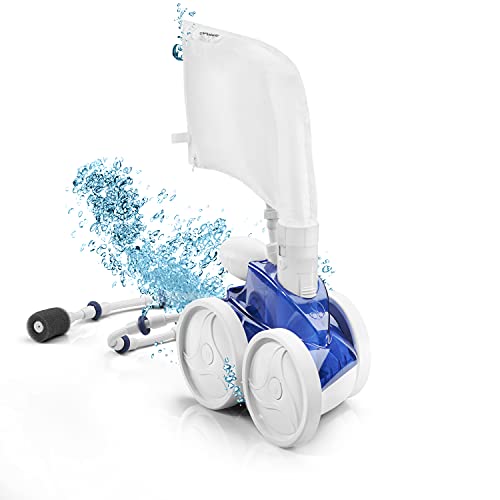
- Best for: Larger in-ground pools with booster pump plumbing and heavy seasonal debris.
- Model: F3
- Jets: Triple venturi jets
- Drive: All-wheel belt drive
- Inlet: 2.25 inches
All 4 Picks at a Glance
| Product | Specs | Action |
|---|---|---|
| Polaris Vac-Sweep 280 |
| Check price on Amazon |
| Polaris Vac-Sweep 360 |
| Check price on Amazon |
| Polaris Vac-Sweep 380 |
| Check price on Amazon |
 Polaris Quattro P40 |
| Check price on Amazon |
Key takeaways
- Compare four pressure side pool cleaners by booster pump needs, debris bag style, jet count and hose reach to find the right fit for your in-ground pool.
A pressure side cleaner is only the right buy if your pool plumbing can feed it. Most models demand a dedicated booster pump on their own pressure line, one runs happily off ordinary return-line pressure, and that single fact decides which cleaners you can even consider. After the plumbing comes the debris question: a fabric bag you empty by hand, or a rigid canister that also traps fine particles. Choose in that order and the field narrows fast.
This roundup is for in-ground pool owners replacing a worn pressure cleaner, finishing a new build with cleaner plumbing already roughed in, or moving away from a suction model that keeps loading the filter with leaves. Every pick below comes from its Amazon listing, with the jet count, inlet size, debris container and pump requirement taken from the listing text and product details rather than from brand brochures.
Quick Picks
As an Amazon Associate we earn from qualifying purchases
| Product | Best for | Key spec from title |
|---|---|---|
| Polaris Vac-Sweep 280 | Pools already plumbed for a booster pump | Double venturi jets, 31 ft hose |
| Polaris Vac-Sweep 360 | Owners with no booster pump | Triple venturi jets, return line powered |
| Polaris Vac-Sweep 380 | Belt drive durability and fast cycles | Triple jets, all-wheel belt drive |
| Polaris Quattro P40 | Leaf load plus fine debris in one canister | Dual filtration canister, 31 ft hose |
How to Choose
Booster Pump or Return Line: The First Fork
Most pressure side cleaners are inert without a dedicated booster pump pushing water through a separate pressure line, and that pump is almost never in the box. One design in this roundup, the Vac-Sweep 360, skips the booster pump entirely and runs on the pressure already moving through a dedicated return line. Before comparing anything else, open the equipment pad and confirm what you actually have: a booster pump and its line, a spare return line, or neither. A cleaner bought for plumbing you do not own cannot run at all.
Bag or Canister: Where the Debris Ends Up
Pressure cleaners carry their own debris container so leaves never reach the skimmer basket or the main filter. Fabric bags come in all-purpose and finer weaves, and the single chamber bags on the 360 and 380 fill faster under trees but weigh almost nothing when you lift them out. The Quattro P40 swaps the bag for a rigid dual-stage canister that holds large pieces and fine particles together behind a clear lid. Match the container to your debris: mostly leaves favors capacity, while gritty silt favors the finer second stage.
Jets, Inlet Size and the Clock
Venturi jets are the engine of a pressure cleaner: water forced through them creates the vacuum that lifts debris and drives the wheels. Two jets move the 280, three jets move the 360 and 380, and listings for both three-jet models put a full clean at three hours or less. Inlet width matters just as much, because a 2.25-inch throat swallows acorns and pebbles that jam narrower cleaners. Finally, check the feed hose against your pool: the 31-foot hoses here must reach the far wall with slack to spare.
Drive Style and the Parts Behind It
The 280 turns its three wheels through a shaft drive, the 380 uses an all-wheel belt drive, and the Quattro P40 adds scrubbing brushes that work up to the waterline. Drive style decides which wear parts you will eventually replace: tires, belts, bags and the scrubbers on the sweep hose tail. Long-running models keep those parts easy to find years later, while newer designs trade that depth of support for better filtration. Whichever you pick, confirm the listing names your pool surface before ordering.
The 4 Best Options
Polaris Vac-Sweep 280
- Best for: In-ground pools with a booster pump already installed and a steady load of leaves and acorns.
- Model: F5
- Jets: Double venturi jets
- Hose: 31 ft feed hose
- Debris capture: All-purpose debris bag
In-ground pools with a booster pump already installed and a steady load of leaves and acorns.
The booster pump is a separate purchase, and the all-purpose bag weave lets the finest silt pass through.
The Vac-Sweep 280 is the long-running default for in-ground pools that already have a booster pump plumbed in. Two venturi jets drive its three wheels and pull debris through a wide 2.25-inch inlet into an all-purpose bag the listing sizes for leaves, acorns and pebbles, so grit never reaches the pump basket or filter. A sweep hose tail works into corners the body cannot reach, and the back-up valve frees the cleaner when it wedges against steps. It suits owners who want a simple, widely supported machine with decades of parts availability behind it.
Polaris Vac-Sweep 360
- Best for: In-ground pools with a dedicated return line and no booster pump in the equipment pad.
- Model: F1
- Jets: Triple venturi jets
- Hose: 31 ft feed hose
- Debris capture: Single chamber filter bag
In-ground pools with a dedicated return line and no booster pump in the equipment pad.
It cannot run on a booster pump line, and pools without a suitable return line need a retrofit fitting first.
The Vac-Sweep 360 answers the biggest objection to pressure-side cleaning: it needs no booster pump. It runs on the pressure in a dedicated return line, and three venturi jets give it the vacuum power to sweep floors and walls and swallow larger debris through the same wide inlet family design. The single chamber filter bag traps what it collects before the water returns to the pool. It fits owners whose plumbing has a return line to spare and who would rather skip the extra pump, its wiring and its upkeep entirely.
Polaris Vac-Sweep 380
- Best for: Larger in-ground pools with booster pump plumbing and heavy seasonal debris.
- Model: F3
- Jets: Triple venturi jets
- Drive: All-wheel belt drive
- Inlet: 2.25 inches
Larger in-ground pools with booster pump plumbing and heavy seasonal debris.
The single chamber bag fills quickly under trees, so leaf season means emptying it mid-cycle.
The Vac-Sweep 380 builds on the same layout with three venturi jets and an all-wheel belt drive, a combination aimed at owners who find shaft-driven cleaners wearing out too soon. Its single chamber debris bag hangs behind a 2.25-inch inlet, so leaves, acorns and pebbles go into the bag instead of the filter, and the listing puts a full clean at three hours or less. Plan on a booster pump and a dedicated pressure line. It suits bigger in-ground pools where debris arrives in volume and cleaning speed matters.
Polaris Quattro P40
- Best for: Pools under trees that drop both bulky debris and fine particles into the water.
- Filtration: Large-capacity dual filtration canister
- Lid: Transparent, shows the debris level
- Intake: Extra-large debris intake
- Brushes: Integrated scrubbing brushes
Pools under trees that drop both bulky debris and fine particles into the water.
The canister needs a rinse whenever the lid shows it full, and the cleaner still needs a booster pump to run.
The Quattro P40 replaces the debris bag with a large-capacity canister that filters in two stages, catching big pieces and fine particles in one container you can watch through a transparent lid. An extra-large intake takes in acorns and leaves, scrubbing brushes work from the floor up to the waterline, and the listing covers every in-ground surface. There is no bag to shake out over the deck; you lift the canister, rinse it and drop it back in. It suits leaf-heavy pools where fine silt follows the big debris down.
Which One Fits Your Situation
Your Pool Already Has a Booster Pump
Take the Vac-Sweep 280 if you want the proven default, or the Vac-Sweep 380 if the pool is large and debris arrives in volume. Both connect to the pressure line you already own, both finish in about three hours, and the 380’s belt drive is the pick when a previous shaft-driven cleaner wore out its running gear.
No Booster Pump and No Plans to Add One
The Vac-Sweep 360 is the only pick here built for you. It draws its power from a dedicated return line, so there is no second pump to buy, wire or maintain. Confirm the return line fitting matches before ordering, because that connection is the whole installation. Your filtration pump does the work it already does every day.
Trees Drop Leaves and Acorns All Season
Choose the Quattro P40. Its canister swallows bulky debris through an extra-large intake and still traps fine particles in the second filtration stage, and the clear lid tells you when to rinse it without pulling the cleaner apart. Bag models work too, but expect mid-cycle emptying on the windiest weeks of the year.
You Want Upkeep You Can Do in Minutes
The Quattro P40 again, for a different reason: rinsing a rigid canister is faster and cleaner than shaking out a fabric bag over the deck. If you prefer the bag routine, the 280’s long production run means fresh bags, tires and tail scrubbers stay easy to source whenever a wear part finally gives out.
Common Mistakes
- Buying a booster-pump cleaner when the pool has no dedicated pressure line to feed it.
- Connecting the Vac-Sweep 360 to a booster pump line, which its design does not accept.
- Letting the debris bag or canister run overfull until the cleaner slows, tips or leaves rows of dirt behind.
- Skipping the hose measurement: a 31-foot feed hose still has to reach the far wall and the bottom of the deep end.
- Ignoring the in-line filter and restrictor setup, which leaves wheel speed outside the range the listing specifies.
Frequently Asked Questions
Does a pressure side cleaner need its own pump?
Most do. Three of the four cleaners here require a separate booster pump on a dedicated pressure line, and that pump is sold separately. The Vac-Sweep 360 is the exception: it runs on the pressure in a return line, so it works in pools that have a suitable return fitting but no booster pump.
How is a pressure side cleaner different from a suction side one?
A pressure side cleaner is pushed around the pool by pressurized water and traps debris in its own bag or canister, so the main filter stays cleaner for longer. A suction side cleaner sends everything it collects through the skimmer and filter instead, which loads the filtration system with leaves and grit.
Will these cleaners work in an above ground pool?
No. Every listing in this roundup specifies in-ground pools, and the feed hoses, wall fittings and pump requirements assume in-ground plumbing. Above ground pools use a separate family of smaller pressure cleaners built for vinyl walls and lower flow, so match the cleaner to the pool type the listing names.
How often should the bag or canister be emptied?
Empty it whenever it looks full, and check it after every run during leaf season. A packed bag adds drag, slows the cleaner and can leave it tipped against a wall. The Quattro P40 makes the check easy because its transparent lid shows the fill level while the cleaner is still in the water.