Key takeaways
- Battery density explained in plain terms: gravimetric vs volumetric energy density, typical Wh/kg and Wh/L figures for lead-acid, NiMH, LFP, NMC and solid-state cells, and how to compare them fairly.
As an Amazon Associate we earn from qualifying purchases.
Affiliate Disclosure: This article contains affiliate links. If you buy through a link on this page, we may earn a commission at no extra cost to you.
Ask which battery has the “best” density and you will get very different answers depending on who is talking. An electric vehicle engineer cares about how much energy fits into a floor pan. A drone pilot cares about how much energy each gram of battery can carry into the air. A homeowner sizing a backup battery cares about neither in isolation, because wall space, weight limits, safety and cycle life all compete with raw density. This guide explains what battery density actually means, publishes the typical figures for the chemistries you can actually buy, and shows you how to compare two batteries fairly instead of being misled by a single headline number.
This is a technical explainer rather than a product roundup. Energy density is a property of a chemistry and a cell design, not a feature one retail product owns, so there is no single “best density battery” to buy off a shelf. What you can do is learn the numbers, understand the trade-offs behind them, and then judge any specific battery, power station or vehicle pack against the ranges below.
The Two Densities: Gravimetric and Volumetric
“Battery density” almost always means energy density, and energy density comes in two forms that are often confused.
Gravimetric energy density, also called specific energy, measures stored energy per unit of mass. It is expressed in watt-hours per kilogram (Wh/kg). This is the number that matters when weight is the constraint: aircraft, drones, wearable devices, handheld tools and, to a large degree, electric cars, where every extra kilogram of battery is a kilogram the motors must accelerate.
Volumetric energy density measures stored energy per unit of volume, in watt-hours per liter (Wh/L). This is the number that matters when space is the constraint: phones, laptops, slim power banks, and any product where the battery must disappear into a fixed enclosure.
A chemistry can be strong on one measure and mediocre on the other. Lead-acid is the classic example of weakness on both counts, which is why it survives mainly where weight and size barely matter. When a manufacturer quotes only one density figure, check which one it is, because the flattering one is usually the one in the brochure.
There is also a third, related term worth knowing: power density, measured in watts per kilogram. Power density describes how fast a battery can deliver energy, not how much it stores. High energy density and high power density pull cell design in opposite directions, a trade-off covered in more depth below.
Typical Energy Density by Chemistry
The ranges below reflect widely published figures for commercial cells and packs. Treat them as orientation, not as a specification for any one product, because cell format, electrode loading and pack construction move the real number around inside each range.
| Chemistry | Gravimetric (Wh/kg, cell level) | Volumetric (Wh/L, cell level) | Notes |
|---|---|---|---|
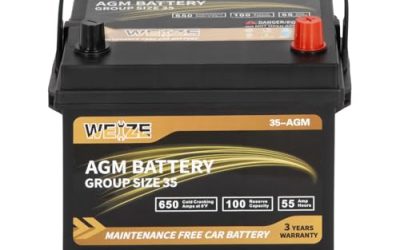
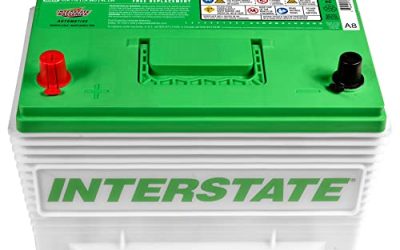
| Lead-acid (flooded / AGM) | about 35–50 | about 80–100 | Cheap, heavy, low density; still common for engine starting |
| Nickel-cadmium (NiCd) | about 40–60 | about 100–150 | Largely phased out over cadmium toxicity |
| Nickel-metal hydride (NiMH) | about 60–120 | about 140–300 | Hybrid car packs and AA rechargeables |
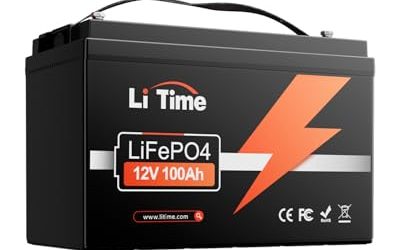
| Lithium iron phosphate (LFP) | about 90–160 | about 200–330 | Lower density, excellent cycle life and thermal stability |
| Lithium-ion NMC / NCA | about 150–270 | about 400–700 | The density leaders among mass-produced rechargeables |
| Lithium polymer (LiPo pouch) | about 150–250 | about 300–600 | A packaging style of lithium-ion, common in drones and RC |
| Lithium-sulfur (Li-S) | about 350–500 demonstrated | lower in practice | Mostly pre-commercial; short cycle life so far |
| Zinc-air (primary) | about 350–470 | about 1,000+ | Non-rechargeable in consumer form; hearing-aid cells |
| Lithium thionyl chloride (primary) | about 500–700 | about 1,000+ | Industrial primary cells for meters and sensors |
Three lessons fall out of that table. First, among rechargeable batteries you can buy today in volume, nickel-rich lithium-ion cells (NMC and NCA families) hold the density crown, which is why they dominate phones, laptops and long-range electric vehicles. Second, LFP gives up a real share of density in exchange for longevity and a wider safety margin, which is why it dominates stationary storage and standard-range vehicles where the weight penalty is acceptable. Third, the very highest figures belong to primary (single-use) or experimental chemistries, which is a reminder that a density number quoted without “rechargeable, and for how many cycles” is only half a fact.
Cell Level vs Pack Level: The Number That Shrinks
Manufacturers love cell-level figures, but you never buy a bare cell in most applications. You buy a pack, and a pack adds a housing, terminals, wiring, fusing, a battery management system, cooling hardware and structural protection. Each of those adds mass and volume that stores no energy at all.
As a rule of thumb, a finished pack delivers roughly 60 to 80 percent of its cells’ gravimetric density, and vehicle packs sit toward the lower part of that range because crash structure and cooling are heavy. So a cell rated at 250 Wh/kg might become a pack at 150 to 180 Wh/kg. When you compare two products, compare pack to pack: take the stated usable capacity in watt-hours and divide it by the product’s actual weight and by its actual external volume. That simple division, done with a spec sheet and a calculator, cuts through most marketing claims.
Cell format matters too. Large cylindrical cells and prismatic cells pack efficiently; pouch cells can be excellent volumetrically inside a device designed around them but need external support. Two batteries with identical chemistry can post noticeably different densities purely because one wastes less space on its enclosure.
Why Density Is Not the Only Number That Matters
Chasing the highest Wh/kg figure without context leads to bad purchases, because density trades against almost everything else a battery does.
Cycle life. The highest-density lithium-ion cells typically wear out sooner than LFP cells. An LFP pack commonly outlasts an NMC pack by a factor of two or more in full charge-discharge cycles, so over its lifetime the “lower density” battery may deliver far more total energy per kilogram bought.
Safety and thermal behavior. Densely packed energy is, by definition, more energy available to release in a failure. LFP’s chemistry is more thermally stable than nickel-rich lithium-ion, one reason it is favored for home storage. Any chemistry still demands a proper management system, correct charging and intact enclosures.
Discharge rate. Cell designers trade energy density against power density. Thin electrodes and high-porosity separators favor fast discharge; thick, densely loaded electrodes favor stored energy. A drone racing pack and a long-range cruising pack may share a chemistry label and sit at opposite ends of this trade.
Temperature performance. Density figures are quoted at room temperature. Cold weather temporarily reduces the energy a battery can actually deliver, and the size of that penalty differs by chemistry and by pack design.
Cost per stored watt-hour. Lead-acid remains the cheapest way to store a watt-hour in a stationary application, which is why density alone has never killed it off in engine starting and budget backup roles.
Emerging Technologies and Their Claims
Several technologies promise to move the density frontier, and their announcements deserve a careful reading.
Solid-state batteries replace the liquid electrolyte with a solid one and, in many designs, allow a lithium-metal anode. Developer claims commonly reach toward 400 to 500 Wh/kg at the cell level. As of this writing, solid-state cells are in pilot production and limited applications rather than mass-market products, and independent pack-level figures are scarce. Treat roadmap numbers as targets, not specifications.
Silicon-rich anodes are already entering commercial lithium-ion cells. Substituting part of the graphite anode with silicon raises capacity, and manufacturers of premium cells credit silicon content for part of the steady climb in Wh/kg over the past decade. The engineering challenge is that silicon swells during charging, which designers manage with blends and binders.
Lithium-sulfur offers a high theoretical ceiling and has demonstrated cell-level figures well beyond conventional lithium-ion in laboratory and niche aerospace settings, but cycle life measured in the low hundreds of cycles has kept it out of mainstream products so far.
Sodium-ion runs the other direction: somewhat lower density than LFP, offset by abundant raw materials and good low-temperature behavior. It is a cost and supply-chain play, not a density play, and it is beginning to appear in stationary storage and small vehicles.
How to Compare Two Batteries Fairly
When a buying decision actually depends on density, such as choosing between power stations, e-bike batteries or RC packs, work through these steps:
- Get usable capacity, not nominal capacity. Use the watt-hour figure the manufacturer states for the whole product. If only amp-hours and voltage are given, multiply them for an approximate watt-hour figure, and remember that nominal voltage makes this an estimate.
- Divide by real weight and real volume. Use the product’s shipping or spec-sheet weight including its case, and its external dimensions, so your Wh/kg and Wh/L describe the thing you will actually carry.
- Match the chemistry to the job. Weight-critical and space-critical uses justify nickel-rich lithium-ion. Long-life, stationary or safety-first uses usually favor LFP even at lower density.
- Check the cycle-life rating at a stated depth of discharge. A battery rated for many more cycles delivers more lifetime energy, which is the density figure that matters over years of ownership.
- Confirm the charger and management system are matched to the chemistry. Density figures assume the battery is charged and protected the way its maker intended.
Frequently Asked Questions
Which battery has the highest energy density?
Among mass-produced rechargeable cells, nickel-rich lithium-ion (NMC and NCA) leads, reaching roughly 270 Wh/kg at the cell level in the best commercial designs. Higher figures exist in primary industrial cells such as lithium thionyl chloride and in experimental lithium-sulfur and solid-state designs, but those are not drop-in consumer rechargeables.
Is a higher Wh/kg always better?
No. It is better only when weight is your binding constraint. For a home backup battery that never moves, cycle life, safety and cost per watt-hour usually matter more, and a lower-density LFP unit is often the smarter purchase.
Why does my power station feel heavier than its cell specs suggest?
Because the pack is not just cells. The inverter, housing, cooling, wiring and management electronics all add weight that stores nothing. Dividing the product’s watt-hours by its total weight gives the honest pack-level density, and it is always lower than the cell-level headline.
Does energy density fall as a battery ages?
The nameplate figure does not change, but usable capacity does. As a battery loses capacity with age and cycling, the energy it actually returns per kilogram falls with it, which is one more reason cycle life belongs in any density comparison.
Bottom Line
The best battery density available in a rechargeable product today comes from nickel-rich lithium-ion cells, at roughly 150 to 270 Wh/kg depending on design, with LFP trading a step down in density for a large step up in lifespan and thermal stability, and lead-acid trailing far behind on both density measures while remaining the budget option for stationary and starting duties. Read every density claim at the pack level, in both Wh/kg and Wh/L, and weigh it against cycle life and safety before letting it decide a purchase. Do that, and a single marketing number will never steer you wrong.