Our Short List of 3
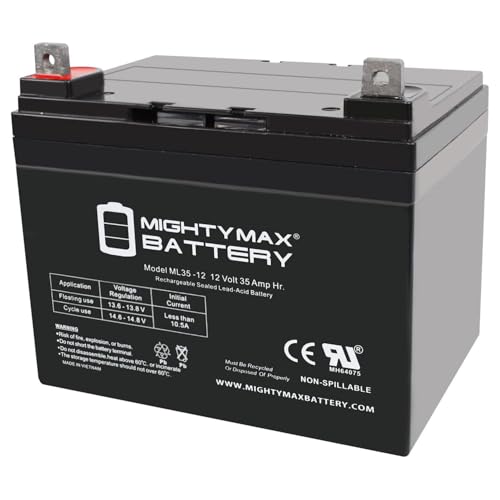
- Best for: A like-for-like U1 replacement for a WheelyBird, Raven or similar electric trap.
- Voltage: 12 volts
- Capacity: 35 amp hours
- Chemistry: Sealed lead acid, AGM
- Dimensions: 7.76 x 5.12 x 7.01 inches

- Best for: Tight trays and harnesses wired for L terminals, with a stated warranty term.
- Voltage: 12 volts
- Capacity: 35 amp hours
- Chemistry: Sealed lead acid, AGM (VRLA)
- Group size: U1 / GT9L

- Best for: Full-day shooting where carry weight matters as much as capacity.
- Chemistry: Lithium iron phosphate (LiFePO4)
- Nominal voltage: 12.8 volts
- Capacity: 50 amp hours, 640 Wh
- Management system: 50A, with low-temperature protection
All 4 Picks at a Glance
| Product | Specs | Action |
|---|---|---|
| Mighty Max ML35-12 12V 35Ah SLA Battery |
| Check price on Amazon |
| Interstate DCM0035L 12V 35Ah AGM Battery |
| Check price on Amazon |
| LiTime 12V 50Ah LiFePO4 Battery with Bluetooth |
| Check price on Amazon |
 Mighty Max ML18-12 12V 18Ah SLA Battery |
| Check price on Amazon |
Key takeaways
- Four 12V batteries for clay pigeon throwers compared on capacity, chemistry, terminals and weight, with every spec taken from the Amazon listing.
An automatic clay thrower does not include its power source, so the battery is a separate decision with trade-offs. Every electric trap runs on a 12-volt deep-cycle battery, and your pick decides how many targets you can throw between charges, how much weight you carry to the field, and how the battery copes with being drained and recharged every weekend. A car starting battery will not do this job well, because throwers draw bursts hundreds of times a session rather than one long crank.
This roundup is for solo shooters running a backyard trap, club members who rotate battery duty, and anyone replacing a tired U1 battery in a thrower cart. Each pick was chosen from its Amazon listing name and stated specifications: voltage, amp-hour capacity, chemistry, case size, terminal style and listed weight. Three picks are sealed lead-acid units in the U1 footprint most thrower trays accept; the fourth is a lithium iron phosphate option for shooters who want more usable capacity at roughly half the carrying weight.
Quick Picks
As an Amazon Associate we earn from qualifying purchases
| Product | Best for | Key spec from title |
|---|---|---|
| Mighty Max ML35-12 | Standard U1 replacement for most electric traps | 12V 35Ah sealed lead acid AGM |
| Interstate DCM0035L | Short trays and L-terminal harnesses | 12V 35Ah AGM, L terminal |
| LiTime 12V 50Ah LiFePO4 Bluetooth | Long days at half the carry weight | 50Ah lithium, 11.27 pounds |
| Mighty Max ML18-12 | Short sessions and compact battery boxes | 12V 18Ah sealed lead acid AGM |
How to Choose
Capacity in Amp Hours Decides Session Length
Amp hours are the fuel gauge. Electric traps draw a short burst of current each time the arm cycles, so a battery’s amp-hour figure decides how many targets you can throw before the machine slows and needs a swap. Thrower makers size their machines around the 33 to 35 amp-hour class, and that capacity throws thousands of targets per charge in maker figures. Drop to an 18 amp-hour battery and sessions shrink in proportion. Buy capacity for your longest typical day, not your average one, because a battery that ends the day nearly empty also ages faster.
Chemistry: AGM Simplicity or Lithium Lightness
Sealed lead-acid AGM is the traditional thrower battery: tolerant of vibration, happy to sit on a maintainer between weekends, and heavy for its capacity, with only about half of its amp hours safely usable. Lithium iron phosphate flips those traits. It delivers nearly its full stated capacity, weighs roughly half as much at the same size, and lasts for thousands of cycles, but it needs a charger with a lithium profile and protection against charging below freezing. Neither chemistry is wrong; the choice is whether you value simple upkeep or light weight and deeper usable capacity.
Case Size and Terminals Must Match Your Trap
A thrower battery has to fit the tray before it can power anything. Most electric traps accept the U1 case, roughly 7.7 by 5.2 inches at the base, but heights vary between about 6.4 and 7.1 inches, and a lid or strap that will not close turns the right capacity into the wrong battery. Terminals matter just as much. Nut-and-bolt posts, L-shaped lugs and threaded inserts all appear on U1 batteries, and your thrower leads end in one specific style. Photograph the old battery’s top before ordering and match both the footprint and the terminal shape.
Weight and the Charging Routine
Weight decides how far you will actually carry the thrower. A 35 amp-hour lead-acid battery weighs 23 to 24 pounds, close to the weight of many traps themselves, while a lithium unit of similar or larger capacity can weigh about 11 pounds. If the battery rides in a wheeled cart, that gap matters less; if it goes in a backpack or a tote across a field, it matters a lot. Whichever chemistry you choose, recharge it the same day you shoot and store it charged, because sitting discharged is what shortens a deep-cycle battery’s life fastest.
The 4 Best Options
Mighty Max ML35-12 12V 35Ah SLA Battery
- Best for: A like-for-like U1 replacement for a WheelyBird, Raven or similar electric trap.
- Voltage: 12 volts
- Capacity: 35 amp hours
- Chemistry: Sealed lead acid, AGM
- Dimensions: 7.76 x 5.12 x 7.01 inches
A like-for-like U1 replacement for a WheelyBird, Raven or similar electric trap.
The box holds the battery and screws only, with no wire harness, so a first-time setup needs cables as well.
The ML35-12 is the battery most thrower owners end up with, because its 35 amp hours sit right in the capacity class that electric traps are designed around. The sealed AGM case can be mounted in any position, which suits thrower trays and carts that tilt or bounce across a field, and the valve-regulated design needs no water checks between sessions. Mighty Max ships the battery with terminal screws only, so plan to reuse your thrower leads or buy a cable set. At 24 pounds it is a two-handed carry, but it stays put once strapped down.
Interstate DCM0035L 12V 35Ah AGM Battery
- Best for: Tight trays and harnesses wired for L terminals, with a stated warranty term.
- Voltage: 12 volts
- Capacity: 35 amp hours
- Chemistry: Sealed lead acid, AGM (VRLA)
- Group size: U1 / GT9L
Tight trays and harnesses wired for L terminals, with a stated warranty term.
The L terminal shape does not match every thrower harness; if your leads end in rings for posts, you need adapters or a different pick.
Interstate’s DCM0035L matches the ML35-12 on voltage and capacity but packages them in a slightly shorter U1 case, which helps when a thrower tray or battery box was molded for the GT9L footprint. The L-shaped terminals suit cable lugs that bolt flat rather than ring leads on posts, so check your thrower harness before ordering. Interstate states a 12-month performance warranty on this listing, the clearest coverage term among the lead-acid picks here, and the sealed AGM build tolerates the vibration of a wheeled trap crossing rough ground.
LiTime 12V 50Ah LiFePO4 Battery with Bluetooth
- Best for: Full-day shooting where carry weight matters as much as capacity.
- Chemistry: Lithium iron phosphate (LiFePO4)
- Nominal voltage: 12.8 volts
- Capacity: 50 amp hours, 640 Wh
- Management system: 50A, with low-temperature protection
Full-day shooting where carry weight matters as much as capacity.
It needs a charger with a lithium profile, and its wider 6.54-inch case will not drop into every U1 tray, so measure before ordering.
The LiTime is the pick for shooters who throw all day and carry their gear a long way. Its 50 amp hours of lithium capacity is nearly all usable, where a lead-acid battery should only be drained about halfway, and it does that work at 11.27 pounds, less than half the weight of the 35Ah lead-acid units above. A built-in 50A management system guards the cells, low-temperature protection blocks charging in freezing weather, and Bluetooth monitoring shows the remaining charge on a phone instead of guessing from thrower speed.
Mighty Max ML18-12 12V 18Ah SLA Battery
- Best for: Short practice sessions and compact traps with small battery boxes.
- Voltage: 12 volts
- Capacity: 18 amp hours
- Chemistry: Sealed lead acid, AGM
- Dimensions: 7.12 x 3.00 x 6.50 inches
Short practice sessions and compact traps with small battery boxes.
Capacity is the compromise here — long days will drain it, and the included hardware stops at screws.
Not every session needs 35 amp hours. The ML18-12 halves the capacity and shrinks the case to a slim 3 inches wide, which makes it the easiest lead-acid option to carry in one hand and a neat fit for compact traps and tight battery boxes. It is the same sealed AGM construction as its bigger sibling, with nut-and-bolt terminals and screws in the box. The trade is session length: expect to recharge more often, and treat this as a practice-round battery rather than the power source for a full club day.
Which One Fits Your Situation
You Shoot Solo in a Backyard or Field
Pick the Mighty Max ML35-12. Its 35 amp hours match the capacity class your trap was built around, the sealed case shrugs off being tipped into a tray, and nut-and-bolt terminals accept the ring leads most throwers ship with. It is the simplest like-for-like swap for a worn U1 battery, and the screws you need are already in the box.
Your Club Runs Long, High-Volume Days
Choose the LiTime 12V 50Ah. Fifty amp hours of lithium, nearly all of it usable, outlasts a 35 amp-hour lead-acid battery across a full day of squads, and at 11.27 pounds a volunteer can swap it one-handed between rounds. Bluetooth charge readings also end the guesswork about whether the battery will finish the last rotation.
Your Thrower Tray Is Tight or Wired for L Terminals
Take the Interstate DCM0035L. At 6.42 inches tall it is the shortest battery here, so lids and straps that foul a taller U1 case usually close over it, and its L terminals match harnesses built for flat lug connections. The stated 12-month performance warranty adds paperwork most budget U1 listings leave vague.
You Shoot Short Rounds and Walk to Your Spot
The Mighty Max ML18-12 keeps the load down. Eighteen amp hours is enough for a focused practice session, the slim case drops into small battery boxes that reject a U1, and the lighter carry leaves energy for targets and shells. Just build the recharge into your routine, because this battery reaches empty sooner than the 35 amp-hour picks.
Common Mistakes
- Buying a car starting battery: it delivers one strong crank, not hundreds of small draws, and it fades early in thrower duty.
- Ordering by amp hours alone and never measuring the tray: U1 heights differ by more than half an inch between the picks above.
- Assuming the thrower includes a battery: most electric traps ship without one, and the manual names a 12-volt deep-cycle unit you supply.
- Leaving a lead-acid battery discharged in the garage until next season, which sulfates the plates and cuts its capacity for good.
- Charging a lithium battery on a lead-acid charger setting, or charging below freezing when the battery has no low-temperature protection.
Frequently Asked Questions
What kind of battery does a clay pigeon thrower need?
A 12-volt deep-cycle battery. Thrower manuals, including the paperwork for popular Do All Outdoors and Champion traps, specify a 12-volt deep-cycle or marine battery that you supply separately. Deep-cycle plates tolerate being drained and recharged repeatedly, which matches the short motor bursts of a throwing arm far better than a starting battery built for one engine crank.
How many targets can one battery charge throw?
It depends on the trap’s motor draw and the battery’s usable capacity. Trap makers quote more than 3,000 throws from a fully charged 12-volt deep-cycle battery on popular models, and one maker figure puts a 33 amp-hour battery near 5,000 throws on an efficient trap. Cold weather, a stiff spring setting and an aging battery all pull the real number down.
Can I run my thrower on a lithium battery?
Yes, if it is a 12-volt lithium iron phosphate battery with a management system that allows the trap’s burst current. The LiTime pick here pairs 50 amp hours with a 50A management system and low-temperature charging protection. Check that your thrower’s peak draw fits the battery’s discharge limits, and use a charger with a lithium profile rather than a lead-acid setting.
How should I charge and store the battery between sessions?
Recharge it the same day you shoot, before it sits discharged. Lead-acid batteries belong on a maintainer during long gaps so they stay full without overcharging, and they store best cool and dry. Lithium batteries store happily at a partial charge and need no maintainer, but keep them away from freezing charging conditions unless the battery has low-temperature protection built in.