Key takeaways
- Compare commercial zero turn mowers with fabricated steel decks, serviceable transaxles and hour-based warranties, and how they differ from residential models.
As an Amazon Associate, we earn from qualifying purchases made through links on this page.

A commercial zero turn mower is not defined by its paint colour or by the word professional printed on the hood. It is defined by hardware: a fabricated steel deck instead of a stamped one, transaxles that can be drained and refilled instead of sealed units, an engine from a manufacturer’s commercial line, and a warranty measured partly in hours of use, because the maker expects the machine to work every day. Residential machines are built around a different assumption, a few hours of cutting each week in season, and nearly every component reflects that lighter duty cycle.
That distinction matters even more when you shop online. Most flagship fleet machines from the big commercial brands move through local outdoor-power retailers and never appear in an online cart at all, so the selection on Amazon US is narrower than the full market. This guide covers the three zero turns currently sold on Amazon US that meet the commercial hardware bar described above: fabricated decks, serviceable Hydro-Gear transaxles, welded frames and hour-based warranty terms. Each pick below explains where it sits on the commercial ladder, who it suits, and where its specification sheet falls short of a full fleet machine, so you can judge the compromises with open eyes.
What to look for in a commercial zero turn mower
Deck construction. A fabricated deck is welded together from flat steel plate, while a residential deck is pressed from a single sheet in a die. Fabricated decks resist flexing and cracking around the spindle pockets, and their deeper chambers move wet grass better. Gauge tells you the plate thickness: lower numbers mean thicker steel. A 10-gauge or 11-gauge fabricated deck is the entry point for commercial work, and the heaviest fleet decks go thicker still. A stamped deck, however smooth its finish, belongs on a residential machine.
Engine series. Engine makers separate their lines clearly. Kawasaki’s FX series is its commercial range, built with heavy-duty air filtration and cast-iron cylinder liners for long daily running; the FR series below it targets premium residential and light commercial use. Kohler draws the same line between its Confidant and Command PRO engines and the 7000 Series found in garden-centre machines. An FX or Confidant badge is one of the fastest ways to tell a genuine commercial mower from a residential one wearing commercial colours.
Transaxles. The drive units decide how long the machine survives daily work. Hydro-Gear’s ZT-3100 is the first rung that counts as commercial grade: it has an external oil filter, a drain and refill procedure, and steel gears, so it can be serviced instead of replaced. Residential ZT-2200 units are sealed for life. Higher fleet machines climb to ZT-3400, ZT-4400 and beyond, with larger charge pumps and axles, but any buying decision should begin by rejecting sealed transaxles outright.
Frame and warranty. Look for a fully welded tubular steel frame rather than bolted channel sections, and read the warranty the way a fleet manager would. A term stated in years alone usually signals residential intent. A term stated in years or hours, whichever comes first, means the manufacturer has priced the warranty for machines that accumulate hours quickly, and the hour cap itself tells you where the model sits in the range.
The supporting details. Rollover protection (ROPS) is standard equipment on true commercial machines and an accessory, if available at all, on residential ones. Greaseable spindles, forged spindle housings, a five-gallon or larger fuel tank, blade tip speed near or above 18,000 feet per minute, and a high-back seat with isolation mounting all point the same way: a machine designed to be maintained in the field and ridden for a full working day.
Ariens Zenith 60: the genuine commercial line pick
The Zenith is the commercial zero turn line in the Ariens catalogue, and the 60-inch Kawasaki model is the most complete commercial specification of the three machines here. Its engine is the Kawasaki FX730V, a 23.5 horsepower, 726 cc V-twin from Kawasaki’s commercial FX series, with the heavy-duty filtration and internal construction that series carries. Power reaches the wheels through Hydro-Gear ZT-3100 transaxles, which are serviceable units with external filtration rather than sealed residential drives.
The deck is Ariens’ ENVY design, fabricated from 10-gauge steel, 60 inches wide, carried on three forged aluminium spindles with forged steel shafts and a dual-belt drive. Blade tip speed is 18,464 feet per minute, cutting height adjusts by foot pedal across 15 positions from 1.5 to 5 inches, and the frame is fully welded tubular steel. The fuel tank holds 5.1 gallons, ground speed reaches 8 miles per hour forward, and the machine weighs 930 pounds, which is proper commercial territory. Ariens backs it with a machine warranty of four years or 750 hours, the highest hour allowance in this guide.
Who it suits: landscaping crews adding a route machine, and owners of large acreages who want a commercial engine and an hour-based warranty without entering the retailer-only flagship market.
Limitations from the specification sheet: the ZT-3100 transaxles, while serviceable and commercial grade, are the entry rung of the commercial Hydro-Gear range, so daily multi-trailer fleet work will eventually argue for ZT-4400 class hardware. The 60-inch deck also demands wide gates and a suitable trailer, and at 930 pounds it is not a machine you load casually.
See the Ariens Zenith 60 on Amazon
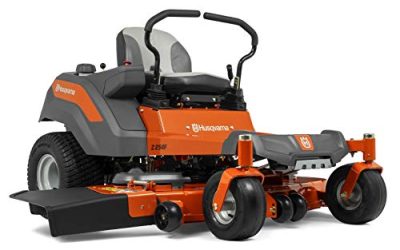
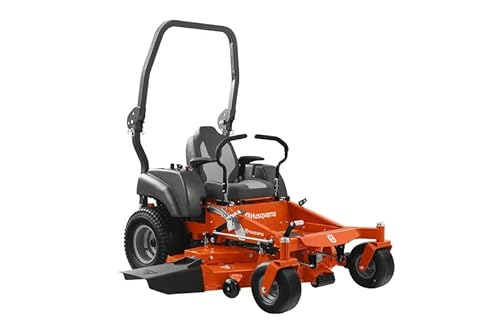
Husqvarna MZ61: width, rollover protection and light commercial duty
The MZ61 is Husqvarna’s bridge into commercial work: the manufacturer describes it as a machine for large properties and light commercial work, and the hardware supports that description. The deck is fabricated steel, 61 inches wide, formed from 11-gauge plate, with three greaseable aluminium spindles and a blade tip speed of 18,500 feet per minute. A roll bar (ROPS) is fitted as standard equipment, which is a clear commercial marker, since residential zero turns rarely include one in the box.
Power comes from a Kawasaki FR730V V-twin producing 24 horsepower from 726 cc, driving through Hydro-Gear ZT-3100 transaxles that Husqvarna’s own listing copy describes as commercial grade. Top ground speed is 8.5 miles per hour, the fastest here, cutting height runs from 1.5 to 4.5 inches, the fuel tank holds 5 gallons, and the machine weighs 844 pounds. The warranty runs four years or 400 hours, whichever arrives first.
Who it suits: solo operators and property owners cutting wide, open ground who want the broadest deck and standard rollover protection, and who value the MZ61’s greaseable spindles for home-workshop maintenance.
Limitations from the specification sheet: the FR730V is from Kawasaki’s premium residential and light commercial line, not the FX commercial series fitted to the Zenith, and the 11-gauge deck plate is one step thinner than the 10-gauge decks of the two Ariens machines. The 400-hour warranty cap is also the lowest in this guide, which tells you honestly where Husqvarna positions the model: serious light commercial work, not all-day fleet duty.
See the Husqvarna MZ61 on Amazon
Ariens APEX 52: the compact commercial-grade crossover

The APEX sits at the top of the Ariens residential catalogue, and Ariens describes it as packed with commercial grade features; on the evidence of the specification sheet, that claim is mostly earned. The deck is the same ENVY design used on the Zenith, fabricated from 10-gauge steel, here in a 52-inch width with three forged aluminium spindles and a dual-belt drive. The transaxles are the same serviceable Hydro-Gear ZT-3100 units, the frame is fully welded steel, and the warranty is again hour-based at four years or 500 hours.
Differences from the Zenith are concentrated in the engine and the dimensions. The APEX 52 uses the Kawasaki FR691V, a 23 horsepower, 726 cc V-twin from the FR series rather than the commercial FX line. It carries the same 5.1-gallon fuel tank and the same 8 mile per hour top speed, cuts from 1.5 to 5 inches across 15 foot-pedal positions, and weighs 816 pounds. The narrower deck is the point of the model: it passes through garden gates and fits smaller trailers that exclude a 60-inch machine.
Who it suits: smaller crews working gated residential routes, and large-property owners who want fabricated-deck, serviceable-transaxle hardware in a footprint that still fits through a standard gate and into a modest shed.
Limitations from the specification sheet: like the MZ61, the APEX pairs its commercial deck and transaxles with an FR-series engine rather than an FX unit, and its 500-hour warranty cap sits between the other two picks. On wide open acreage the 52-inch deck simply covers ground more slowly than the 60 and 61-inch machines, so the compact advantage reverses into a time cost.
See the Ariens APEX 52 on Amazon
Comparison table
| Model | Deck | Engine | Transaxles | Warranty | Fuel | Top speed | Weight |
|---|---|---|---|---|---|---|---|
| Ariens Zenith 60 | 60 in, fabricated 10-gauge ENVY | Kawasaki FX730V, 23.5 hp | Hydro-Gear ZT-3100 | 4 years or 750 hours | 5.1 gal | 8 mph | 930 lb |
| Husqvarna MZ61 | 61 in, fabricated 11-gauge, ROPS fitted | Kawasaki FR730V, 24 hp | Hydro-Gear ZT-3100 | 4 years or 400 hours | 5 gal | 8.5 mph | 844 lb |
| Ariens APEX 52 | 52 in, fabricated 10-gauge ENVY | Kawasaki FR691V, 23 hp | Hydro-Gear ZT-3100 | 4 years or 500 hours | 5.1 gal | 8 mph | 816 lb |
Frequently asked questions
What is the real difference between a commercial and a residential zero turn?
Construction and serviceability. A commercial machine uses a fabricated plate-steel deck, transaxles with filters that can be serviced, an engine from the manufacturer’s commercial series, and a warranty that counts hours as well as years. A residential machine typically combines a stamped deck, sealed transaxles and a years-only warranty, and is built for a few hours of weekly cutting rather than daily work.
Are these three machines truly commercial, or residential models in disguise?
They sit at the entry level of the commercial class, and this guide has tried to be plain about that. The Zenith uses a genuine commercial-series engine and carries the longest hour-based warranty here. The MZ61 and APEX 52 pair commercial decks and transaxles with engines from the class below the full commercial line. All three are built well above residential specification, and none is a substitute for a flagship fleet mower with ZT-4400 or larger drives.
Why are so few commercial zero turns sold on Amazon?
Because the commercial channel runs through local outdoor-power retailers who assemble, deliver and service the machines, and the biggest fleet brands supply that channel almost exclusively. What reaches Amazon US tends to be the commercial lines of brands that also sell to homeowners, plus marketplace listings from equipment retailers, which is why this guide lists three machines rather than ten.
Does deck gauge actually matter for a working mower?
Yes, in the specific places decks fail. Plate thickness decides how well the deck resists cracking around spindle mounts and bending along the front edge after striking roots, stones and kerbs. A fabricated 10-gauge or 11-gauge deck can also be welded back to shape after damage, while a thin stamped deck usually cannot, which is why gauge is one of the first figures a commercial buyer checks.
How many hours should a commercial zero turn last?
With scheduled oil, filter and transaxle servicing, an entry-level commercial machine of this type is generally expected to work well beyond the hour figure printed in its warranty, while a residential machine used commercially often wears its sealed transaxles and stamped deck out early. The hour cap in the warranty is best read as the manufacturer’s own statement of intended duty, which is why it features so prominently in the comparisons above.
Conclusion
For a buyer who wants the most complete commercial specification available on Amazon US, the Ariens Zenith 60 is the clear first choice: a commercial-series Kawasaki FX engine, a 10-gauge fabricated deck and the longest hour-based warranty of the three. The Husqvarna MZ61 answers with the widest cut, standard rollover protection and the highest ground speed, accepting an FR-series engine and the shortest hour cap in exchange. The Ariens APEX 52 keeps the Zenith’s deck and transaxle hardware in a 52-inch frame that fits gates and trailers the bigger machines cannot. Whichever you choose, hold every candidate to the same test applied here: fabricated deck, serviceable transaxles, an engine badge from a commercial line, and a warranty that counts hours. A machine that passes all four is a commercial mower; one that fails them is a residential mower with ambitious paintwork.