Key takeaways
- Find the best wood cutting saws for your workshop, from circular and miter saws to table, jig and reciprocating saws, with the specs that matter most.
Almost every woodworking project comes down to a handful of cuts: breaking sheet goods down to size, crosscutting boards to length, ripping long stock along the grain, following curves, and trimming pieces that are already in place. No single saw does all of those jobs equally well, which is why the best wood cutting saws for a home workshop are usually a small set of tools that each own one type of cut. This guide walks through the five saw types that cover nearly every cut a DIYer or small-shop woodworker will make, and picks one proven model for each role.

Each pick below is a powered saw built for cutting wood, chosen for motor strength, cutting capacity, guide accuracy and the quality of its safety features. Specs are taken from the manufacturer listings so you can compare like for like, and every model is a current, widely stocked tool rather than a discontinued leftover.
Disclosure: As an Amazon Associate, this site may earn from qualifying purchases made through links in this article, at no additional cost to you.
How to Choose the Right Wood Cutting Saw
Start with the cut, not the tool. If most of your work is breaking down plywood and cutting boards to rough length, a circular saw is the natural first purchase. If you build furniture, frames or trim work and need repeated, exact crosscuts and miters, a miter saw earns its bench space. Ripping solid stock and sheet goods to precise widths is table saw work. Curves, cutouts and interior shapes belong to the jigsaw, and rough cuts in awkward places, from pruning-adjacent trimming to cutting lumber in a remodel, are where a reciprocating saw shines.
After the cut type, look at these factors:
- Motor power. Corded saws are rated in amps and cordless saws by battery platform voltage. For wood, a 15-amp corded motor or a modern brushless cordless motor handles hardwoods and thick stock without bogging down.
- Blade size and cutting capacity. Blade diameter sets the maximum depth of cut. A 7-1/4-inch circular saw blade cuts through standard two-by lumber in one pass, while a 12-inch miter saw handles wider boards and taller trim profiles.
- Guides and fences. Accuracy comes from the fence, miter gauge and bevel stops, not from the blade alone. Rack and pinion fences, detent plates with positive stops and clear angle scales all make repeatable cuts easier.
- Dust management. A dust port that fits a shop vacuum keeps the cut line visible and the workspace cleaner, which matters most on table saws and miter saws.
- Safety features. Electric brakes stop blades faster, blade guards that move smoothly reduce hang-ups, and riving knives on table saws help prevent kickback.
Best Circular Saw: DEWALT DWE575SB
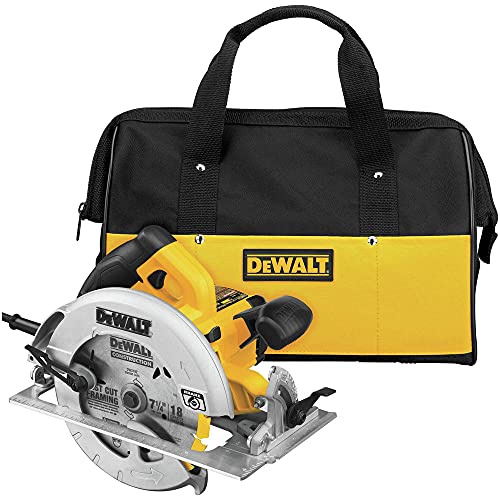
The circular saw is the most versatile wood cutting saw most people will own, and the DEWALT DWE575SB (ASIN: B007QUZ16A) is the benchmark corded model in the 7-1/4-inch class. Its 15-amp motor spins the blade fast enough to push through framing lumber, plywood and hardwood boards without the stalling that plagues weaker saws, and an electric brake brings the blade to a stop quickly when you release the trigger.
What sets this saw apart for wood cutting is the combination of capacity and control. The 7-1/4-inch blade gives a depth of cut of about 2-9/16 inches, enough for two-by material at a square cut and still workable at common bevel angles. The bevel capacity reaches 57 degrees with positive stops at 22.5 and 45 degrees, which covers the angled cuts used in framing, decking and simple joinery. At 8.8 pounds it is light for a full-size corded saw, and that low weight matters when you are guiding the saw along a straightedge on a sheet of plywood.
The shoe is sturdy and the bevel and depth adjustments are easy to read and lock. A dust blower helps keep the cut line visible. For a first wood cutting saw, or as the portable workhorse alongside a bench saw, the DWE575SB is the pick that fits the widest range of projects.
Best for: breaking down sheet goods, crosscutting lumber, general DIY and jobsite wood cutting.
Best Miter Saw: DEWALT DWS779
When cuts need to be exact and repeatable, a miter saw replaces guesswork with positive stops and a fixed fence. The DEWALT DWS779 (ASIN: B01ESCU5WS) is a 12-inch double bevel sliding compound miter saw, which means the blade slides on rails for wide crosscuts, tilts both left and right for bevels, and rotates for miter angles, all without flipping the workpiece.
The 15-amp motor runs at 3,800 RPM, giving the 12-inch blade the speed to leave clean edges in hardwood trim, crown molding and furniture stock. The sliding action extends crosscut capacity well beyond a fixed-head saw, so wide shelving boards and stair treads fit comfortably. The stainless steel miter detent plate uses multiple positive stops at the angles used most often, and the cam lock miter handle makes it quick to dial in and hold an angle.
Because it bevels in both directions, the DWS779 handles compound cuts for crown molding laid flat, a job that frustrates owners of single bevel saws. The tall sliding fence supports larger trim pieces, and the dust collection port captures a meaningful share of the fine dust miter saws produce. It is a bench tool rather than a portable one, so plan a stand or a permanent bench spot for it.
Best for: trim and molding, picture frames, furniture parts and any project built on accurate crosscuts and miters.
Best Table Saw: DEWALT DWE7491RS
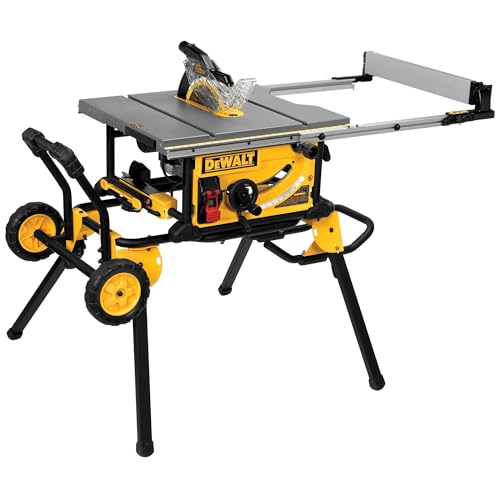
Ripping is the cut no handheld saw does as accurately as a table saw, and the DEWALT DWE7491RS (ASIN: B00F2CGXGG) is the jobsite table saw that home workshops most often adopt. The 10-inch blade is driven by a 15-amp motor at 4,800 RPM, and the headline figure is its 32-1/2-inch rip capacity, wide enough to rip a sheet of plywood down the middle or size cabinet panels without a second setup.
The rack and pinion telescoping fence is the feature owners praise most. It moves smoothly, stays parallel to the blade and locks down accurately, which is the difference between parts that fit and parts that need trimming. The rolling stand folds for storage and transport, so the saw can live in a garage corner and roll out when needed. A modular guarding system, riving knife and anti-kickback pawls are included, and the blade guard can be adjusted without tools.
Depth of cut is about 3-1/8 inches at 90 degrees, covering standard lumber dimensions with room to spare. Onboard storage keeps the fence, miter gauge and push stick with the saw. For building cabinets, bookcases and shop furniture, this is the wood cutting saw that anchors the whole workflow.
Best for: ripping boards and sheet goods to width, cabinet and furniture work, and repeatable straight cuts.
Best Jigsaw: Bosch JS470E

Curves and cutouts need a different tool entirely. The Bosch JS470E (ASIN: B004323NPK) is a corded top-handle jigsaw with a 7.0-amp motor, the strongest in its class, and variable speed up to 3,100 strokes per minute. That power matters in thick hardwood and dense sheet goods, where underpowered jigsaws wander off the line and scorch the wood.
Four orbital action settings let you match blade movement to the job: straight strokes for fine, splinter-conscious cuts in visible surfaces, and aggressive orbital settings for fast progress in rough stock. Cutting capacity reaches 5-7/8 inches in soft wood, far beyond the countertop and board work most jigsaws see. The tool-free blade change system ejects hot blades without touching them, and the low-vibration design plus a precision-machined plunging mechanism help the blade track the line instead of deflecting.
An adjustable dust blower keeps the pencil line in view, and the die-cast footplate bevels up to 45 degrees for angled cuts. Because it is corded, the JS470E never pauses for a battery swap during long pattern work. For scroll-style curves, sink cutouts, notches and template following, it is the wood cutting saw that fills the gap the straight-cut saws leave behind.
Best for: curves, cutouts, notches and detailed shapes in boards and sheet goods.
Best Reciprocating Saw: DEWALT DCS367B

Some wood cutting happens in places no bench saw can reach: trimming a post in place, cutting lumber during a remodel, breaking down pallets or pruning-thick branches around the yard. The DEWALT DCS367B (ASIN: B01M69K91R) is a compact brushless reciprocating saw on the 20V MAX platform, built short enough to fit between studs and into the tight spots where demolition and rough carpentry happen.
The brushless motor delivers strong cutting speed with better runtime than brushed equivalents, and the variable speed trigger gives control for starting cuts in visible wood without skating across the surface. The four-position blade clamp is a genuinely useful detail: the blade can be mounted in different orientations, including flush-cutting positions, so you can trim dowels, pegs and protruding stock close to a surface. A pivoting shoe adjusts the depth of cut and helps extend blade life, and an LED light illuminates dark cavities and cabinet interiors.
This is a bare tool, so it suits owners already invested in the DEWALT 20V MAX battery platform. Paired with a wood-cutting blade, it handles rough sizing and tear-out work quickly; with a pruning blade it moves outside for limbs and roots. It will never replace a table saw for accuracy, but for the cuts that happen away from the bench, nothing else in this guide is as adaptable.
Best for: demolition, rough cuts in place, flush trimming, pallet breakdown and yard wood cutting.
Which Wood Cutting Saw Should You Buy First?
If you are building a workshop from zero, the usual order is circular saw first, because it handles the widest range of rough and finish cuts with a straightedge guide. Add the table saw when projects shift toward furniture and casework, where rip accuracy decides the result. The miter saw comes next for trim-heavy work and repeat crosscuts, the jigsaw whenever curves and cutouts appear, and the reciprocating saw when remodeling or outdoor work enters the picture.
Whichever saw you start with, budget attention for blades. A sharp, appropriate blade, fine-tooth for finish work and coarse for framing, improves cut quality more than any other single change, and most of these saws accept standard blades that are easy to find. Match blade type to the saw and the material, let the blade reach full speed before entering the wood, and support the workpiece so the offcut cannot pinch the blade.
Wood Cutting Saw Safety Basics
Powered saws reward a few consistent habits. Wear eye protection on every cut and hearing protection for extended sessions. Keep guards in place and let blades stop completely before setting a saw down. Clamp or firmly support workpieces instead of holding them by hand near the blade path. On table saws, use a push stick for narrow rips and stand to the side of the blade line. On circular saws, set blade depth so the blade extends only slightly below the workpiece. Disconnect power or remove the battery before changing any blade, and check that the blade is mounted in the correct rotation direction.
Frequently Asked Questions
What is the best saw for cutting wood at home?
For most households, a 7-1/4-inch circular saw covers the widest range of jobs, from plywood breakdown to cutting boards to length. Pair it with a straightedge guide and it substitutes for several larger tools until your projects outgrow it.
Can one saw replace a table saw and a miter saw?
Not fully. A circular saw with guides can approximate many of their cuts, but a table saw rips more accurately and a miter saw repeats angles faster. The picks in this guide are organized by cut type so you can add tools as your projects demand them.
What blade size do I need for cutting two-by lumber?
A 7-1/4-inch circular saw blade cuts through standard two-by material in a single pass at 90 degrees. Larger blades, such as the 10-inch blade on the table saw and the 12-inch blade on the miter saw in this guide, add capacity for thicker and wider stock.
Are cordless saws strong enough for wood cutting?
Modern brushless cordless saws handle the large majority of DIY wood cutting. Corded models still make sense for stationary tools and long ripping sessions, which is why this guide mixes both types according to the role each saw plays.
How do I get cleaner cuts in plywood?
Use a fine-tooth blade intended for sheet goods, support the panel fully so it cannot sag, score the cut line or apply tape along it to reduce surface tear-out, and place the good face according to your saw type: down for circular and table saws, up for jigsaws.