Our Short List of 3
All 5 Picks at a Glance
| Product | Specs | Action |
|---|---|---|
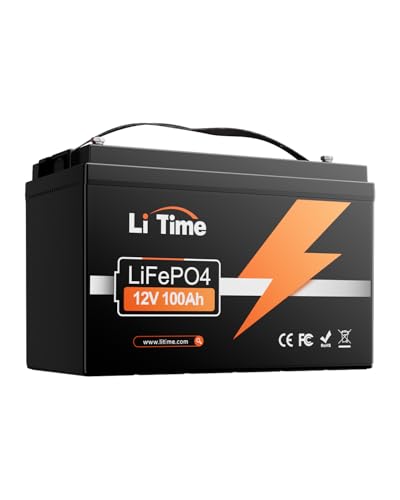 1. LiTime 12V 100Ah Group 31 LiFePO4 | Check price on Amazon | |
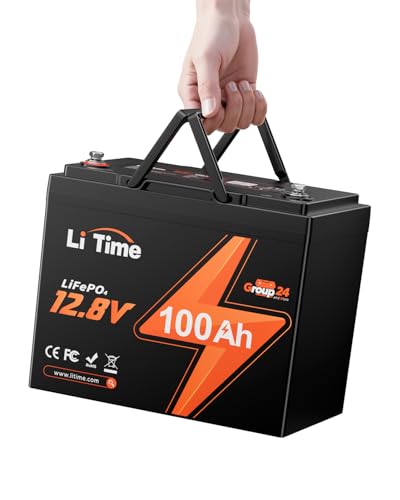 2. LiTime 12V 100Ah Group 24 LiFePO4 | Check price on Amazon | |
 3. ECO-WORTHY 12V 100Ah Group 24 LiFePO4 with Bluetooth | Check price on Amazon | |
 4. Renogy 12V 100Ah Deep Cycle AGM | Check price on Amazon | |
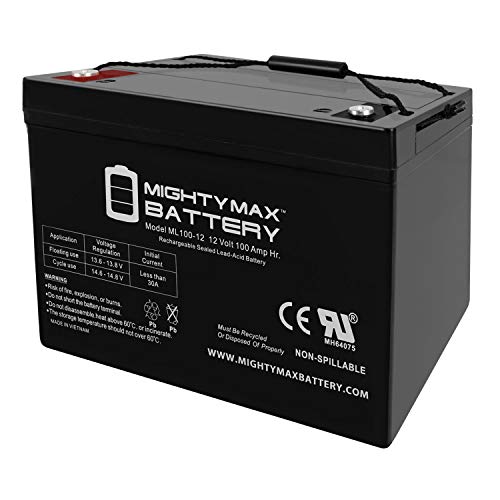 5. Mighty Max ML100-12 SLA AGM | Check price on Amazon |
Key takeaways
- Best trolling motor battery for bass boat: five 12V 100Ah deep-cycle picks, lithium and AGM. Compare group size, weight, terminals and charger needs.
Disclosure: As an Amazon Associate, this site may earn from qualifying purchases made through links on this page.
Intro
A trolling motor battery is not a starting battery, and that one distinction decides this whole article. A starting battery gives a short, hard burst of current to crank an engine and then rests. A trolling motor battery gives a steady draw for hours, pulling a bass boat along a weed line at low speed, holding it against a breeze, and running a fish finder and a livewell pump along the way. The battery that does that job is a deep-cycle battery, built to be drawn down and recharged again and again, and every pick in this article is a 12 volt, 100 amp-hour deep-cycle battery.
The keyword asks for a trolling motor battery for a bass boat, so the pool is narrow on purpose. Five picks, all 12 volts, all 100 amp-hours, all deep-cycle. Three are lithium iron phosphate, the light, long-life chemistry that has taken over the trolling motor world. Two are absorbed glass mat lead-acid, the older, heavier chemistry that still has a place where budget and simplicity matter. The same capacity across all five picks is deliberate: it makes the comparison honest, because the differences that matter are chemistry, group size, weight, terminals, and charger needs, not a bigger number on one label.
One hundred amp-hours at 12 volts is 1,200 watt-hours of nominal energy. That is the arithmetic that sets a day on the water. A 55 pound thrust trolling motor draws about 50 amps at full throttle, so a 100 amp-hour battery gives about two hours at full throttle in round numbers, and far longer at the low speeds where a bass boat actually fishes. Most of a day is spent at a quarter or a third of full throttle, holding position or creeping along a bank, and at those speeds a single 100 amp-hour battery covers a full day for most anglers. A 24 volt or 36 volt motor needs two or three 12 volt batteries wired in series.
All five picks were confirmed live on Amazon US renders dated 2026-11-27, with the real buy button present in both the English and Vietnamese renders and no out-of-stock marker in the buy box. The renders were pulled by an earlier writer group in this same batch and re-checked for this article. Every ASIN in this article should still be re-opened on the live product page before ordering, because battery listings change with stock and the renders are dated 2026-11-27.
At a Glance
- LiTime 12V 100Ah Group 31 LiFePO4 — lithium iron phosphate, 100 amp-hour, Group 31 tray size, 100 amp battery management system, listed for 15,000 plus cycles, 22.05 pounds. The long-life lithium pick for a full day in wind.
- LiTime 12V 100Ah Group 24 LiFePO4 — lithium iron phosphate, 100 amp-hour, Group 24 tray size, 1,280 watt-hours usable, listed for 4,000 plus cycles. The smaller-tray lithium pick for a boat with a Group 24 box.
- ECO-WORTHY 12V 100Ah Group 24 LiFePO4 with Bluetooth — lithium iron phosphate, 100 amp-hour, Group 24 tray size, Bluetooth 5.1 monitoring, low-temperature cutoff, 23.15 pounds. The pick for an angler who wants to see the state of charge on a phone.
- Renogy 12V 100Ah Deep Cycle AGM — absorbed glass mat lead-acid, 100 amp-hour, maximum discharge 1,100 amps for 5 seconds, low self-discharge. The AGM pick for a boat that already has an AGM charger.
- Mighty Max ML100-12 SLA AGM — absorbed glass mat lead-acid, 100 amp-hour, Group 30H, UL certified. The AGM pick with a note: internal thread terminals need bolts or adapters, stated below.
- Every pick is a 12 volt, 100 amp-hour deep-cycle battery. No starting battery appears in this article.
- A 24 volt motor needs two 12 volt batteries in series. A 36 volt motor needs three.
- Lithium picks need a charger with a lithium profile. AGM picks need a charger with an AGM profile.
How to Choose
Start with the motor, not the battery. A 12 volt trolling motor takes one 12 volt battery. A 24 volt motor takes two 12 volt batteries wired in series. A 36 volt motor takes three. The batteries in a series set must be the same type, the same capacity, and the same age, because a mixed set ages unevenly and the weakest battery sets the limit for the whole set.
Group size comes next, and it is a physical check, not a guess. Group 24 is the smaller tray size. Group 31 is the larger tray size. Group 30H is Mighty Max’s own size class for the ML100-12. Measure the battery tray or box in your boat: length, width, height, and the clearance above the terminals for cables and a hold-down. A Group 31 battery will not fit a Group 24 box, and a battery that fits the tray but leaves no room for the terminal cables is a battery that will not work.
Chemistry is the third choice. Lithium iron phosphate gives close to its full nominal capacity in usable energy, so a 100 amp-hour lithium battery gives close to 100 usable amp-hours. Absorbed glass mat practice keeps regular discharge to about one half of nominal capacity for long life, so a 100 amp-hour AGM battery gives about 50 usable amp-hours in regular use. Lithium weighs about a third of an AGM battery of the same capacity, which matters in a bass boat where weight sits in the stern. Lithium is listed for thousands of cycles, AGM for hundreds. Lithium holds voltage through most of its discharge, so thrust stays steady late in the day. The trade is simple: lithium gives more usable energy, less weight, and a longer service life, and it asks for a lithium-profile charger and a higher outlay up front.
Terminals are the fifth check. Most deep-cycle batteries in this class use standard post or threaded terminals that take ring terminals and a wing nut or a bolt. The Mighty Max ML100-12 uses internal thread terminals, which need bolts or adapters that do not ship with the battery. That is not a flaw in the battery, but it is a real extra step, and it is stated in the pick section so no one discovers it at the ramp.
The Picks
1. LiTime 12V 100Ah Group 31 LiFePO4
LiTime 12V 100Ah Group 31 LiFePO4 Deep Cycle Battery
One hundred amp-hours of lithium iron phosphate in a Group 31 tray size, with a 100 amp battery management system, listed for 15,000 plus cycles, at 22.05 pounds. This is the long-life lithium pick in this article. The Group 31 size is the larger tray size: if your boat has a Group 24 box, this battery will not fit, and pick 2 or pick 3 is the right lithium choice instead. The 100 amp management system guards against overcharge, over-discharge, over-current, and short circuit. At 22.05 pounds, this battery is a one-person lift. Pair it with a charger that has a lithium profile.
This ASIN was confirmed live on Amazon US renders dated 2026-11-27, with the real buy button present in both the English and Vietnamese renders and no out-of-stock marker in the buy box. Re-open the live product page before ordering.
2. LiTime 12V 100Ah Group 24 LiFePO4
LiTime 12V 100Ah RV Lithium Battery, Group 24
One hundred amp-hours of lithium iron phosphate in a Group 24 tray size, with 1,280 watt-hours usable, listed for 4,000 plus cycles. This is the smaller-tray lithium pick, and it exists for one reason: many bass boats have a Group 24 battery box, and a Group 31 battery will not fit it. The listing states 1,280 watt-hours usable, which is the full nominal energy of a 100 amp-hour, 12 volt battery. Four thousand cycles is still years of weekend use. Pair this battery with a charger that has a lithium profile, and check the tray dimensions and the terminal clearance before you order.
This ASIN was confirmed live on Amazon US renders dated 2026-11-27, with the real buy button present in both the English and Vietnamese renders and no out-of-stock marker in the buy box. Re-open the live product page before ordering.
3. ECO-WORTHY 12V 100Ah Group 24 LiFePO4 with Bluetooth
ECO-WORTHY 12V 100Ah LiFePO4 Lithium Battery with Bluetooth
One hundred amp-hours of lithium iron phosphate in a Group 24 tray size, with Bluetooth 5.1 monitoring, a low-temperature cutoff, at 23.15 pounds. The Bluetooth link shows the state of charge, the voltage, and the current draw on a phone, which answers the question every angler asks at midday: how much battery is left. The low-temperature cutoff stops charging when the cells are too cold to accept a charge safely, which protects the battery for an angler who fishes cold water and charges in an unheated garage. At 23.15 pounds, this battery is a one-person lift, and it pairs with a charger that has a lithium profile.
This ASIN was confirmed live on Amazon US renders dated 2026-11-27, with the real buy button present in both the English and Vietnamese renders and no out-of-stock marker in the buy box. Re-open the live product page before ordering.
4. Renogy 12V 100Ah Deep Cycle AGM
Renogy 12 Volt 100Ah Deep Cycle AGM Battery
One hundred amp-hours of absorbed glass mat lead-acid, with a maximum discharge of 1,100 amps for 5 seconds and a low self-discharge figure. This is the AGM pick for a boat that already has an AGM charger. Regular use keeps discharge to about one half of nominal capacity for long life, so a 100 amp-hour AGM battery gives about 50 usable amp-hours in regular use. It needs a charger with an AGM profile, which many onboard chargers already have. It is heavier than any lithium pick here, several times heavier, and it is a two-person lift or a ramp and a cart. It also drops voltage as it discharges, so thrust fades earlier in the day.
This ASIN was confirmed live on Amazon US renders dated 2026-11-27, with the real buy button present in both the English and Vietnamese renders and no out-of-stock marker in the buy box. Re-open the live product page before ordering.
5. Mighty Max ML100-12 SLA AGM
Mighty Max ML100-12 12 Volt 100 AH SLA AGM Battery
One hundred amp-hours of absorbed glass mat lead-acid in Group 30H, UL certified, with internal thread terminals. This is the second AGM pick in this article, and it travels with a note that must be read before ordering: the internal thread terminals need bolts or adapters, which do not ship with the battery. Group 30H is Mighty Max’s own size class, so measure the tray before you order. The usable energy follows the same AGM practice as pick 4: about one half of nominal capacity in regular use, so about 50 usable amp-hours. Order the terminal hardware at the same time as the battery, and confirm the thread size with the seller before you order. Pair this battery with a charger that has an AGM profile.
This ASIN was confirmed live on Amazon US renders dated 2026-11-27, with the real buy button present in both the English and Vietnamese renders and no out-of-stock marker in the buy box. Re-open the live product page before ordering.
Comparison Table
| Pick | Chemistry | Capacity | Group size | Weight | Terminals | Charger profile |
|---|---|---|---|---|---|---|
| LiTime Group 31 LiFePO4 | Lithium iron phosphate | 100 Ah | Group 31 | 22.05 lb | Standard | Lithium |
| LiTime Group 24 LiFePO4 | Lithium iron phosphate | 100 Ah | Group 24 | Not stated | Standard | Lithium |
| ECO-WORTHY Group 24 LiFePO4 Bluetooth | Lithium iron phosphate | 100 Ah | Group 24 | 23.15 lb | Standard | Lithium |
| Renogy 100Ah AGM | Absorbed glass mat | 100 Ah | Not stated | Not stated | Standard | AGM |
| Mighty Max ML100-12 SLA AGM | Absorbed glass mat | 100 Ah | Group 30H | Not stated | Internal thread, adapters needed | AGM |
Which One Fits Your Situation
If your boat has a Group 31 box and you fish most weekends, pick 1 is the answer. The LiTime Group 31 lithium battery gives close to its full 100 amp-hours in usable energy, a 100 amp management system, the longest cycle figure in this article, and a weight of 22.05 pounds that one person can lift. Pair it with a lithium-profile charger and it is the set-and-forget choice.
If your boat has a Group 24 box, the choice is pick 2 or pick 3, and the difference is monitoring against cycle figure. Pick 2, the LiTime Group 24 lithium battery, has the longer listed cycle figure at 4,000 plus cycles. Pick 3, the ECO-WORTHY Group 24 lithium battery, has Bluetooth monitoring and a low-temperature cutoff. If you fish cold water and charge in an unheated garage, the cutoff is worth more than the cycle figure. If you want to see the state of charge on a phone at midday, the Bluetooth link is worth more than the cycle figure. Either one gives the same 100 amp-hours of lithium energy in the same tray size.
If your boat already has an AGM charger and your days on the water are short and close to the ramp, pick 4 is the answer. The Renogy AGM battery needs no new charger, no new cables, and no change in habit. Expect about one half of nominal capacity in regular use, a heavier battery, and thrust that fades earlier in the day. Those are acceptable trade-offs for a short day and a lower outlay.
If you want an AGM battery with a UL mark and you are willing to order terminal hardware at the same time, pick 5 is the answer. The Mighty Max ML100-12 is a straightforward 100 amp-hour AGM battery in Group 30H, and its internal thread terminals need bolts or adapters that do not ship with the battery. Confirm the thread size with the seller, order the hardware with the battery, and measure the Group 30H tray before you order.
FAQ
Can I use a starting battery for a trolling motor?
No. A starting battery is built for a short, hard burst of current to crank an engine, and it is not built to be drawn down for hours. A trolling motor needs a deep-cycle battery, built to be drawn down and recharged again and again. Every pick in this article is a deep-cycle battery.
How long will a 100 amp-hour battery run a trolling motor?
It depends on speed. A 55 pound thrust motor draws about 50 amps at full throttle, so a 100 amp-hour battery gives about two hours at full throttle in round numbers. At the low speeds where a bass boat actually fishes, a quarter or a third of full throttle, the same battery covers a full day for most anglers. Lithium gives close to its full nominal capacity in usable energy. AGM gives about one half of nominal capacity in regular use.
Do I need a special charger for a lithium trolling motor battery?
Yes. A lithium iron phosphate battery needs a charger with a lithium profile, which charges to the right voltage and stops at the right point. An AGM battery needs a charger with an AGM profile. A charger built for a flooded lead-acid battery or a plain automotive battery is the wrong tool for either chemistry.
What size battery box do I need?
Measure the tray or box in your boat: length, width, height, and the clearance above the terminals for cables and a hold-down. Group 24 is the smaller tray size in this article. Group 31 is the larger tray size. Group 30H is Mighty Max’s own size class for the ML100-12. A battery that fits the tray but leaves no room for the cables is a battery that will not work.
Can I mix an old battery with a new one?
No, not in a series set. Batteries wired in series for a 24 volt or 36 volt motor must be the same type, the same capacity, and the same age. A mixed set ages unevenly, and the weakest battery sets the limit for the whole set.
Final Take
The right trolling motor battery for a bass boat is a 12 volt, 100 amp-hour deep-cycle battery, and the choice inside that frame is chemistry, tray size, and charger. Pick 1, the LiTime Group 31 lithium battery, is the long-life lithium choice for a boat with a Group 31 box. Picks 2 and 3 are the Group 24 lithium choices, with pick 2 leading on cycle figure and pick 3 leading on Bluetooth monitoring and a low-temperature cutoff. Pick 4, the Renogy AGM battery, is the simple choice for a boat that already has an AGM charger and for short days close to the ramp. Pick 5, the Mighty Max ML100-12, is the AGM choice with a UL mark, with the condition that its internal thread terminals need bolts or adapters that do not ship with the battery.
Measure the tray before you order, match the charger to the chemistry, and never mix old and new batteries in a series set. All five picks were confirmed live on Amazon US renders dated 2026-11-27, and every ASIN should still be re-opened on the live product page before ordering, because battery listings change with stock and the renders are dated 2026-11-27.