Our Short List of 3


All 5 Picks at a Glance
| Product | Specs | Action |
|---|---|---|
| 1. NOCO Boost GB40 — 1,000 amps, the compact pick for small engines | Check price on Amazon | |
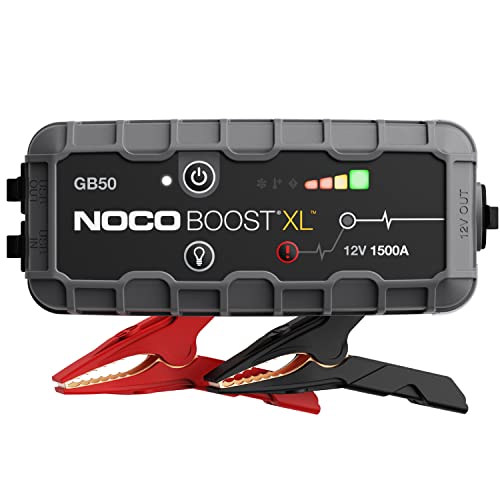 2. NOCO Boost GB50 — 1,500 amps, the step up for mid-size engines | Check price on Amazon | |
| 3. NOCO Boost GB70 — 2,000 amps, the pick for large gas V8s and mid-size diesels | Check price on Amazon | |
 4. NOCO Boost GB150 — 3,000 amps, the heavy pick for the largest engines | Check price on Amazon | |
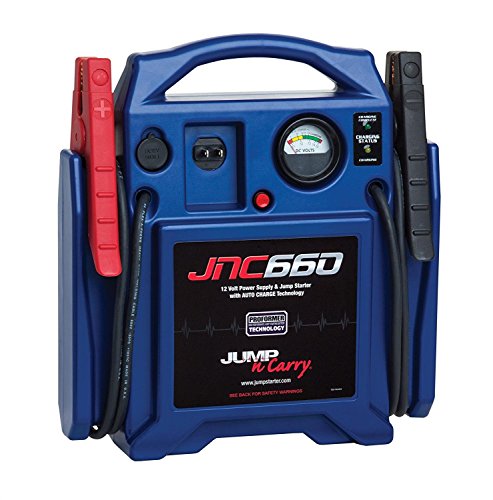 5. Clore Jump-N-Carry JNC660 — 1,700 amps, the lead-acid pick with heavy cables | Check price on Amazon |
Key takeaways
- Can you boost a boat battery? Yes — a 12V jump starter or a donor 12V battery can crank a marine battery. Here is how it works and 5 jump starters that fit.
Disclosure: As an Amazon Associate, this site may earn from qualifying purchases made through links on this page.
Intro
Can you boost a boat battery? Yes. A flat 12V marine battery can be jump-started the same way a flat car battery can, with a portable jump starter or with jumper cables from another 12V battery. The answer is general knowledge, not the result of a practical trial, and the picks below are jump starters whose listings name watercraft among the vehicles they cover.
A boost is a rescue, not a repair. It gives a flat battery enough crank to turn the engine over so the charging system can take over. If the battery is old, sulfated, swollen, cracked, leaking, or gives off a strong sulfur smell, do not boost it. A battery in that condition needs replacement, and forcing current through it can damage the battery and the boat’s electrical system. The same applies to a battery that has been sitting flat for months. A boost may start the engine once, but a battery that will not hold a charge after a run needs to come out.
Most boats on the water today run a 12V system, and every pick in this guide is a 12V jump starter. Never connect a 12V pack to a 24V system, and never connect two 12V packs in series to make 24V unless the pack maker states that arrangement in writing. Match the pack to the engine. A small outboard needs far less peak current than a large inboard diesel, and the engine coverage figures in this guide come straight from the listings.
At a Glance
| Jump starter | Peak current | Engine coverage per listing | Starts per charge | Weight |
|---|---|---|---|---|
| NOCO Boost GB40 | 1,000 amps | Up to 6.0L gas, 3.0L diesel | Up to 20 | 2.4 lb |
| NOCO Boost GB50 | 1,500 amps | Up to 7.0L gas, 4.5L diesel | Up to 30 | See note below |
| NOCO Boost GB70 | 2,000 amps | Up to 8.0L gas, 6.0L diesel | Up to 40 | 5.0 lb |
| NOCO Boost GB150 | 3,000 amps | Up to 9.0L gas, 7.0L diesel | Up to 80 | 7.5 lb |
| Clore Jump-N-Carry JNC660 | 1,700 amps | Up to 8.0L gas, 6.0L diesel | Not stated | Not stated |
Four of the five picks are NOCO models. That is not a brand preference. The listings for marine-covered jump starters on Amazon US are NOCO-heavy, and the Clore is the one non-NOCO pick with a live listing that fits the same job. Each pick is a different size in the same lineup, so the choice is about engine size and reserve, not about hunting for a different badge.
How to Choose
Match peak amps to the engine. Peak current is the headline number, and it decides whether the pack can turn the engine over at all. A 1,000-amp pack suits small outboards and small gas inboards. A 1,500-amp pack covers mid-size gas engines and small diesels. A 2,000-amp pack covers large gas V8s and mid-size diesels. A 3,000-amp pack covers the largest gas and diesel engines a recreational boat is likely to carry. Buy the pack for the biggest engine you own, not the smallest, and leave margin for a cold morning and a battery that is low but not fully flat.
Check the starts-per-charge figure. A pack that gives 20 starts per charge is enough for a day boat that goes out once and comes home. A pack that gives 40 or 80 starts suits a boat that stays on the water for days, a liveaboard, or a household with more than one boat. Remember that the figure is the maker’s stated maximum under its own conditions, and a hard crank in cold weather uses more of the pack than a warm-weather crank.
Weigh lithium against lead-acid. Four picks here are lithium packs. They are light, compact, and hold a charge in storage for months. The Clore is a lead-acid unit built around a 22Ah Clore Proformer battery. It is far heavier and bulkier, but it carries heavy cables, a voltmeter, and a 12V DC outlet, and some boat owners prefer a lead-acid unit for a permanent spot in a dock box or a large lazarette. If the pack lives in a small dry bag or a glove box, lithium wins. If it lives in a fixed spot on a big boat, the Clore’s heft matters less.
Look for water resistance. A boat is a wet place. The four NOCO picks carry an IP65-rated housing with rubberized over-molding, which the listings describe as protection against water, dust, and impact. Keep the pack dry anyway. IP65 covers spray and splashes, not submersion, and a pack that has been dunked should be dried out and checked before its next use.
Mind the clamps and the cables. Short cables are fine when the battery sits under a console a short reach from where you kneel. Long, heavy cables matter when the battery sits deep in a bilge compartment. The Clore’s cables are the longest here, and the listings for the two cable figures disagree, which is noted in its pick below. Check the cable length on the listing before ordering, and measure the reach from your usual working position to the battery terminals.
Keep the pack charged. A jump starter only helps if it has energy in it. Recharge the pack after every use, and top it up at the start of the season. The recharge times in this guide run from 3 hours on the smallest NOCO to 7 hours on the largest, so plan around them rather than discovering a flat pack at the ramp.
Know when a boost is the wrong move. Do not boost a battery with a cracked case, a swollen case, or visible leaking. Do not boost a battery that is hot to the touch. Do not boost a 6V system with a 12V pack. If the engine cranks slowly after a boost and a run, the battery is likely at the end of its life, and the right move is a new marine battery, not a bigger jump starter.
The Picks
1. NOCO Boost GB40 — 1,000 amps, the compact pick for small engines
NOCO Boost GB40 1000A UltraSafe Portable Lithium Jump Starter
The GB40 is the smallest pick here, and it suits small outboards and small gas inboards. The listing states 1,000 amps of peak lithium power, up to 20 starts per charge, and coverage for gas engines up to 6.0L and diesel engines up to 3.0L. Its internal battery is listed at 2,150 mAh. The pack doubles as a power bank for phones and tablets, and it recharges in 3 hours, the quickest recharge in this guide.
The listing also describes a 100-lumen LED with 7 modes, including SOS and strobe, and an IP65-rated housing with rubberized over-molding. The clamps are spark-proof with reverse-polarity protection, so a reversed connection does not spark. The listing’s detail table gives the weight as 2.4 lb, while one bullet describes a 2.5 lb form factor. The two figures are close, and the detail table figure is the one used here. Confirm the weight with the seller if a fraction of a pound matters for your kit.
2. NOCO Boost GB50 — 1,500 amps, the step up for mid-size engines
NOCO Boost GB50 1500A UltraSafe Jump Starter
The GB50 is the middle of the NOCO ladder, and it is the pick for owners who want more margin than the GB40 gives without carrying the weight of the GB70. The listing states 1,500 amps of peak power, up to 30 starts per charge, and coverage for gas engines up to 7.0L and diesel engines up to 4.5L. Its internal battery is listed at 3.15 amp-hours. The LED is listed at 200 lumens with 7 modes, and the housing carries the same IP65 housing as the rest of the NOCO lineup.
One figure needs a note. The listing gives two different weights: one bullet describes a 2.7 lb form factor, while the detail table lists the item weight as 3.3 lb. This guide uses the detail table figure in the comparison table and flags the conflict here so you can confirm the exact weight with the seller before ordering. The recharge time is listed at 5 hours.
3. NOCO Boost GB70 — 2,000 amps, the pick for large gas V8s and mid-size diesels
NOCO Boost GB70 2000A UltraSafe Jump Starter
The GB70 is the pick for large gas V8s and mid-size diesels, and it is the strongest balance of power and portability in this guide. The listing states 2,000 amps of peak power, up to 40 starts per charge, and coverage for gas engines up to 8.0L and diesel engines up to 6.0L. Its internal battery is listed at 5,000 mAh. The LED is listed at 400 lumens with 7 modes, and the housing is IP65-rated with rubberized over-molding.
At 5.0 lb, the GB70 is twice the weight of the GB40, but it covers a much wider engine range and gives twice the starts per charge. It recharges in 6 hours. If your boat carries a big-block gas inboard or a mid-size diesel, this is the first pack in the lineup that covers it with real margin, and it is the pick most owners in that bracket will reach for first.
4. NOCO Boost GB150 — 3,000 amps, the heavy pick for the largest engines
NOCO Boost GB150 3000A UltraSafe Jump Starter
The GB150 is the heavyweight of this guide. The listing states 3,000 amps of peak power, up to 80 starts per charge, and coverage for gas engines up to 9.0L and diesel engines up to 7.0L. Its internal battery is listed at 3,000 in the capacity field, which the listing does not label with a unit, so this guide does not repeat a capacity figure for it. The LED is listed at 500 lumens with 7 modes, and the housing is IP65-rated.
At 7.5 lb, the GB150 is a dock-box or lazarette unit rather than a glove-box unit, and it recharges in 7 hours, the longest recharge in this guide. It suits large diesel inboards, boats that stay out for days, and households that want one pack to cover several boats. If your engine is smaller than the GB150’s coverage, the GB70 gives the same job with less weight and a shorter recharge.
5. Clore Jump-N-Carry JNC660 — 1,700 amps, the lead-acid pick with heavy cables
Clore Automotive Jump-N-Carry JNC660 1700 Peak Amp 12 Volt Jump Starter
The JNC660 is the only non-NOCO pick here, and the only lead-acid pick. It is built around a 22Ah Clore Proformer battery, and the listing states 1,700 amps of peak current with coverage for gas engines up to 8.0L and diesel engines up to 6.0L. It carries a voltmeter that shows the charge state of its onboard battery, a DC outlet for 12V accessories, and two 2.1A USB outputs.
Two listing conflicts need stating plainly. First, the title gives 1,700 amps of peak current, while the detail table lists 2,000 jump-starting amps. This guide uses the title figure of 1,700 amps. Second, the bullets describe 46-inch heavy-duty #2 AWG cables, while the detail table lists a 24-inch cable length and #6 AWG gauge. The cable length matters on a boat, so confirm the exact cable length and gauge with the seller before ordering. The listing publishes no weight figure and no starts-per-charge figure. Its dimensions are listed at 5.1 by 14.1 by 16.3 inches, and as a 22Ah lead-acid unit it is far bulkier than the lithium packs in this guide. That bulk buys long, heavy cables and a voltmeter.
Comparison Table
| Jump starter | Peak current | Gas / diesel coverage | Starts per charge | LED | Recharge time | Weight |
|---|---|---|---|---|---|---|
| NOCO Boost GB40 | 1,000 amps | 6.0L / 3.0L | Up to 20 | 100 lumens | 3 hours | 2.4 lb |
| NOCO Boost GB50 | 1,500 amps | 7.0L / 4.5L | Up to 30 | 200 lumens | 5 hours | 3.3 lb per detail table |
| NOCO Boost GB70 | 2,000 amps | 8.0L / 6.0L | Up to 40 | 400 lumens | 6 hours | 5.0 lb |
| NOCO Boost GB150 | 3,000 amps | 9.0L / 7.0L | Up to 80 | 500 lumens | 7 hours | 7.5 lb |
| Clore JNC660 | 1,700 amps | 8.0L / 6.0L | Not stated | Not stated | Not stated | Not stated |
All five listings name watercraft among the vehicle types they cover. All five are 12V units. None of the five is a battery charger. A jump starter gives a short, high-current crank. A charger restores a battery over hours. If your battery is flat because it sat all winter, a boost gets you going, and a proper marine charger is the tool that brings the battery back to a full charge.
Which One Fits Your Situation
Small outboard or small gas inboard, day boat: the GB40. It is the lowest-weight pick, it recharges the quickest, and its 1,000-amp figure covers small engines with margin. Keep it in a dry bag under the console.
Mid-size gas engine or small diesel, weekend boat: the GB50. The step from 1,000 to 1,500 amps and from 20 to 30 starts per charge is worth it when the engine is bigger and the boat stays out longer. Confirm the weight figure with the seller first, since the listing gives two figures.
Large gas V8 or mid-size diesel: the GB70. It is the sweet spot of this guide, with 2,000 amps, 40 starts per charge, and a 5.0 lb body that still fits in a locker. Most owners with a big-block gas inboard will stop here.
Largest diesel inboard, or one pack for several boats: the GB150. The 3,000-amp figure and 80 starts per charge cover the biggest recreational engines and the longest trips. Accept the 7.5 lb weight and the 7-hour recharge, and give it a fixed home in a dock box or lazarette.
You want heavy cables, a voltmeter, and a 12V outlet, and weight is not a concern: the Clore JNC660. It is the only lead-acid pick, the only pick with a voltmeter and a DC outlet, and the only pick whose cables are built for a deep reach into a bilge compartment. Confirm the cable length and gauge with the seller first, since the listing gives two different figures for each.
FAQ
Can you boost a boat battery with a car jump starter?
Yes, if both systems are 12V and the pack’s peak current covers the boat engine. Match the peak amps to the engine, connect red to positive and black to negative or a ground point, and keep the pack and clamps dry.
Can you jump a boat battery from a car battery?
Yes. Use jumper cables from a 12V car battery to the 12V boat battery, positive to positive and negative to negative, with the donor vehicle’s engine off. Start the boat engine, then remove the cables in reverse order. Do not use a 24V source on a 12V boat system.
How long should you run the engine after a boost?
Run the engine long enough for the charging system to put energy back, then finish with a marine charger at the dock. A short idle at the ramp is not enough to restore a deeply flat battery. If the battery is flat again the next morning, it is likely at the end of its life.
Will a jump starter work on a completely flat battery?
A pack needs to sense some voltage before it will deliver current, and a battery that reads near zero may not trigger it. Some packs include a manual override for that case; confirm the override behavior on the listing before ordering.
Can you boost a 24V boat system with a 12V jump starter?
No. A 12V pack cannot crank a 24V system, and connecting it can damage the pack and the boat’s electrical system. Boats with 24V systems need a 24V jump starter or a 24V donor battery.
What should you do if the battery will not hold a charge after a boost?
Replace it. A boost is a rescue, not a repair. A battery that cranks once and then goes flat again has lost its ability to hold energy, and no jump starter fixes that. Take the old battery to a proper collection point and fit a new marine battery of the same group size.
Final Take
Yes, you can boost a boat battery, and a portable jump starter is the simplest way to do it on the water. The GB40 covers small engines, the GB50 covers mid-size engines, the GB70 covers large gas V8s and mid-size diesels, the GB150 covers the largest engines, and the Clore JNC660 gives heavy cables, a voltmeter, and a 12V outlet. Match the peak amps to your engine, keep the pack charged, and remember that a boost gets you home. A battery that will not hold a charge after a run needs replacement, not a bigger pack.