Our Short List of 3
All 3 Picks at a Glance
| Product | Specs | Action |
|---|---|---|
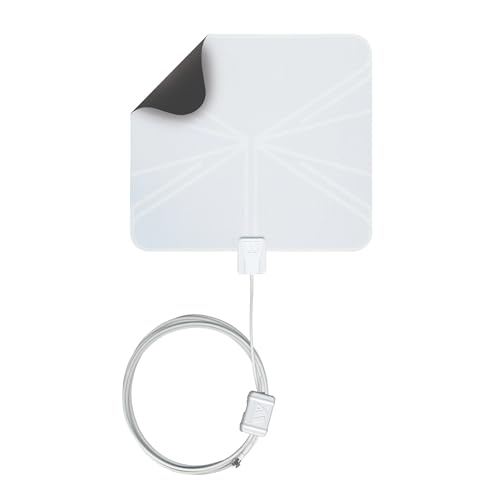 Winegard FlatWave Amped FL5500A | Check price on Amazon | |
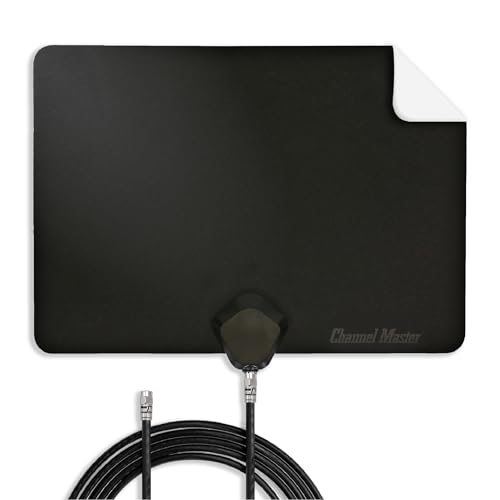 Channel Master FLATenna | Check price on Amazon | |
 GE Ultra Edge Indoor HD Digital TV Antenna | Check price on Amazon |
Key takeaways
- Compare the best multi-directional flat indoor antennas for free local TV, with amplified and passive picks for apartments, suburbs, and city homes.
A flat indoor antenna is one of the simplest ways to watch local broadcast television without a cable subscription or an outdoor installation. The panel is thin enough to sit on a wall, a window, or behind a television, and a multi-directional design receives signals from the front and the back, so precise aiming matters less than it does with a single-direction model. That flexibility is especially useful in cities and suburbs where broadcast towers are spread around a home rather than clustered in one place.
This guide compares four flat, multi-directional digital antennas from established brands, covering amplified and passive options, longer and shorter cable runs, and compact and larger panels. Every pick is a flat panel design for indoor use, receives digital over-the-air broadcasts, and is listed with specifications taken from its product listing so readers can match range, band coverage, and cable length to their own rooms before buying.
As an Amazon Associate, we earn from qualifying purchases.
How to Choose
Start with distance to the broadcast towers. A stated range is a best-case figure under clear conditions, not a guarantee for every address, building material, or floor level. Homes close to towers often do well with a passive panel, while homes farther out, or rooms with interior walls between the antenna and the towers, usually benefit from an amplified model. Checking a tower map for the home address before ordering helps set realistic expectations and shows whether key stations sit in different directions, which is exactly the situation a multi-directional panel is built for.
Next, check band coverage. Most local stations broadcast on UHF, but some important channels, including a number of major network affiliates, still use high-VHF. A flat antenna that covers both UHF and high-VHF gives a fuller channel lineup than a UHF-only panel. Low-VHF stations are uncommon in many markets, and flat panels in general are less suited to low-VHF, so viewers who know a wanted station uses that band should confirm coverage carefully before choosing any flat model.
Amplification deserves a balanced look. An amplifier can help with weaker signals and with longer cable runs, and models with low-noise amplifier designs aim to boost the signal without adding as much interference. Close to strong towers, however, amplification can overload a tuner and make reception worse, so a model with a removable or switchable amplifier, or a passive model, can be the better fit in strong-signal areas. Placement still matters more than any single specification: higher is usually better, a window facing the towers often helps, and moving the panel a few feet and rescanning can change the channel lineup noticeably.
Cable length and mounting style shape daily use. A longer coaxial cable gives more freedom to place the panel high or near a window while the television stays in place, while a shorter cable suits a television already near the best reception spot. Reversible black and white finishes and paintable surfaces help a panel blend into a room, which matters because the best position is often visible. Finally, confirm the television has a built-in digital tuner or that a separate tuner box is available, and plan to run a channel scan after every meaningful move of the panel.
Winegard FlatWave Amped FL5500A
The Winegard FlatWave Amped FL5500A is an amplified flat panel built for viewers who need help with weaker or mixed signals. Winegard describes it as a multi-directional design that receives signals from the front and back, with high-VHF and UHF coverage for the bands most local stations use. Its Clear Circuit amplification is presented as a low-noise approach, which is relevant for suburban homes where some channels arrive strongly and others sit near the edge of reception. The panel is dual color, with a black side and a white side, so it can be turned to better match a wall.
A generous cable run is part of the appeal. The listing includes an attached mini coaxial cable and a USB power cable with an adapter for the amplifier, giving the amplifier power from a television USB port or a wall outlet. The stated range is suited to metro and suburban distances rather than very remote use, and the panel supports high-definition broadcasts and is described as ready for newer broadcast standards. For a living room where the television is not beside a window, that combination of amplification and cable length offers more placement choices than a short-cable passive panel.
Who It Suits
This model suits suburban and edge-of-metro viewers who have a mix of strong and weaker stations and who need a longer cable to reach a higher or clearer placement spot. It also suits viewers who want amplifier help without moving to an outdoor antenna. Viewers very close to strong towers may prefer a passive option instead, since amplification is less necessary there and can be counterproductive when signals are already strong.
Antennas Direct ClearStream FLEX Amplified
The Antennas Direct ClearStream FLEX is an amplified, ultra-thin flat antenna that uses a loop-based design with a high-VHF element inside a flat panel form. The listing describes it as multi-directional, reversible, and paintable, with grips that help it stay on a wall. That paintable surface is a practical detail for a panel that may need to sit in a visible position for the best reception, because it can be matched more closely to the surrounding wall color than a fixed-finish panel.
The FLEX includes an in-line amplifier powered by USB and a coaxial cable long enough for common living room layouts. Its stated range places it in the middle of this guide, aimed at city and suburban homes that need some amplifier support but are not at extreme distance from the towers. Coverage of both UHF and high-VHF matters for channel completeness, since a missing high-VHF element can mean missing a major local station even when UHF reception is good. The panel is also described as ready for 4K broadcast viewing where those broadcasts are available.
Specs
| Item | Detail |
|---|---|
| Brand | Antennas Direct |
| Model | ClearStream FLEX |
| Type | Flat indoor TV antenna, amplified |
| Reception | Multi-directional |
| Bands | UHF and high-VHF |
| Stated range | 50 plus miles |
| Cable | 12 foot coaxial cable |
| Amplifier | USB in-line amplifier |
| Finish | Reversible and paintable |
| Mounting | Grips to walls |
| ASIN | B075LFTCTQ |
Who It Suits
This model suits viewers who want an amplified flat panel that can be painted or reversed to fit a room, and who need both UHF and high-VHF coverage in one panel. It is a sensible middle option for suburban homes at moderate distances from the towers. Viewers who need the longest cable run in this guide, or who live in a very strong-signal area and want no amplifier in the line, should compare the other picks before deciding.
Channel Master FLATenna
The Channel Master FLATenna is a passive flat panel, sold as the FLATenna Duo in its ultra-thin dual-sided form. With no amplifier in the line, it keeps the setup simple: connect the included coaxial cable to the television, place the panel, and scan for channels. The dual-sided design shows black on one side and white on the other, so the visible face can be chosen to suit the room. Channel Master positions the FLATenna for reliable reception at shorter distances, and the listing notes support for 4K smart televisions, over-the-air broadcasts, and NextGen TV where available.
A passive design has real advantages in the right setting. There is no amplifier power connection to arrange, no USB port to keep free, and no risk of amplifier overload in a strong-signal neighborhood. The stated range is the most modest in this guide, which makes placement and distance especially important, but for apartments and homes near towers that modesty may not matter in practice. The panel covers the digital broadcast bands used by local stations and keeps the installation reversible and renter friendly, since it can be moved or removed without outdoor hardware.
Who It Suits
This model suits city and near-suburban viewers who live relatively close to the towers and want the simplest possible flat antenna setup. It also suits renters and anyone who prefers no amplifier power connection. Viewers at longer distances, in lower floors surrounded by dense buildings, or in rooms far from a window are more likely to need one of the amplified models in this guide.
GE Ultra Edge Indoor HD Digital TV Antenna
The GE Ultra Edge, model 11264, is a slim flat panel with a reversible black and white design made to blend into home decor. The listing describes long-range reception for its class, support for 4K and high-definition smart televisions, and coverage of both VHF and UHF signals. It is a passive design, so like the FLATenna it avoids amplifier overload concerns and needs no separate power connection for an amplifier. Its shorter included cable reflects a simpler, closer placement style, with the panel near the television or on a nearby wall or window.
The Ultra Edge is the most decor-focused pick here. The reversible finish lets the owner choose the side that disappears better against a wall, and the slim profile keeps it unobtrusive in a bedroom, kitchen, or smaller living room where a larger panel would dominate the wall. Because it is passive and compact, expectations should be set by distance: it is aimed at homes where local signals are reasonably strong, rather than at fringe reception. For those homes, it offers a clean way to add local news, sports, and network programming alongside streaming services.
Who It Suits
This model suits viewers in strong-signal areas who put appearance and simplicity first, especially in smaller rooms where the television and the best panel position are close together. It also suits a second television in a bedroom or kitchen that mainly needs the major local channels. Viewers farther from the towers, or who need a long cable to reach a window across the room, should look at the amplified picks with longer cable runs.
FAQ
Do multi-directional flat antennas need to be aimed at the towers?
They need less precise aiming than a single-direction antenna because they receive from the front and the back, but placement still matters. Height, nearby walls, and large metal objects can affect reception, so trying a window, a higher wall position, and a fresh channel scan after each move is still worthwhile, especially for weaker stations.
Is an amplified flat antenna always better than a passive one?
No. An amplifier can help at moderate distances and with weaker stations, but in strong-signal areas it can overload the tuner and reduce reception. Homes close to the towers often do well with a passive panel such as the FLATenna or the GE Ultra Edge, while homes farther out usually benefit more from an amplified model.
Can a flat indoor antenna receive both VHF and UHF stations?
Many can, but coverage varies by model. Most local stations use UHF, while some major stations use high-VHF, so a panel listing both UHF and high-VHF coverage gives a more complete lineup. Viewers should check which bands their wanted stations use and match that to the specifications before buying, rather than assuming every flat panel covers every band equally.
Will a flat indoor antenna work in an apartment or rental?
Yes, that is one of their main uses. Flat panels mount on walls or windows without outdoor hardware, drilling into a roof, or a landlord-approved exterior installation, and they can be removed cleanly when moving. Reception in apartments varies by floor, building materials, and which side of the building the unit faces, so keeping the cable long enough to try more than one wall or window is helpful.
Final Verdict
For most buyers, the choice comes down to distance and simplicity. The Winegard FlatWave Amped FL5500A offers the longest stated range and the longest cable in this guide, making it the most flexible option for suburban homes with mixed signal strength. The Antennas Direct ClearStream FLEX sits close behind it, with amplification, both main broadcast bands, and a paintable reversible panel for rooms where appearance matters as much as reception.
For homes close to the towers, the passive picks are easier to live with. The Channel Master FLATenna keeps the setup power-free with a longer cable than the GE model, while the GE Ultra Edge is the slimmest, most decor-focused option for a nearby television in a strong-signal area. None of these panels can overcome extreme distance or a heavily shielded room on specifications alone, so matching the stated range to the actual tower distance, confirming high-VHF coverage where it is needed, and planning to experiment with placement and rescanning will matter more than any single headline number. Chosen that way, a flat multi-directional antenna is a low-effort way to add free local channels alongside streaming.
Product and ASIN Reference
| Product name | ASIN |
|---|---|
| Winegard FlatWave Amped FL5500A | B00BN5Z2WM |
| Antennas Direct ClearStream FLEX Amplified | B075LFTCTQ |
| Channel Master FLATenna | B074TWSQFM |
| GE Ultra Edge Indoor HD Digital TV Antenna | B00TU7RJCQ |