Key takeaways
- Entry level: fixed color-temperature canless LED discs in packs, with fewer dimming guarantees.
- Mid-range features: selectable-CCT packs such as the Halo HLB family, with a deep dimming range and a multi-year warranty.
- Premium features: 90 CRI or higher versions (Juno lists them, and Halo’s spec sheet for a related HLB version lists 90+ CRI) and architectural trims with adjustable or wall-wash optics.
For a modern kitchen, a thin canless LED downlight with a selectable color temperature, such as the Halo HLB 6-inch or the Juno Wafer series, is the easiest recessed lighting to choose, because it needs no separate housing, goes into new or existing ceilings and lets you set the warmth of the light at install time. “Modern kitchen recessed lighting” here means flat, low-profile ceiling downlights with a clean trim and no visible can. This guide compares those two named families, explains how to plan a layout, and lists the details to match before buying: ceiling type, dimmer, color temperature and the driver box.
Recessed lights are hardwired. Cutting ceiling holes, joining circuits and connecting the driver is electrical work, so follow the maker’s manual and local code, use only fixtures with the listing the maker states, and call a licensed electrician where required.
Our top picks
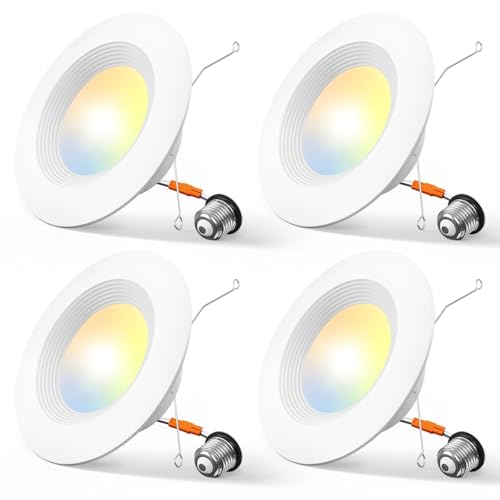


As an Amazon Associate we earn from qualifying purchases at no extra cost to you.
Why canless slim downlights suit modern kitchens
Older recessed lighting used a metal can that was installed before the drywall. Slim canless downlights replace the can with a flat LED disc and a small junction or driver box. Both Halo and Juno describe their ultra-thin LED lines as installable in remodels or new construction, with no can housing needed. That matters in a kitchen, where the ceiling above may hold ducts, joists and pipes and there may be little space for a deep housing.
Both are mainstream North American brands selling the same product type, which is why the specifications look similar. What differs is the dimming range, the way the driver is packaged and the pack sizes.
At a glance
| Family | Sizes and style | Key stated specs | Limits |
|---|---|---|---|
| Halo HLB 6-inch canless (for example model HLB6099FS1EMWR) | 6 in round, ultra-thin canless; the maker also lists 4 in slim versions | 5-position switch from 2700K to 5000K; flicker-free dimming to 5 percent with a compatible dimmer; no can housing, with a small junction box supplied with the fixture per retail listings; 5-year warranty; sold in packs of six | Needs a dimmer the maker lists as compatible; the six-pack buys more fixtures than a small kitchen may need |
| Juno Wafer (for example WF6 selectable CCT) | 4 in and 6 in; canless | 90 CRI or higher; 120V; triac dimming down to 10 percent; wet-location listed per the maker’s spec sheets; five selectable color temperatures (2700K to 5000K); remote driver box | Driver is a separate box that needs a place in the ceiling or an accessible junction; higher dimming floor than the Halo |
Halo HLB: wide dimming range and a clear color switch
Retail and maker listings describe the Halo HLB 6-inch as a complete ultra-thin canless light for new construction, remodel and retrofit, with a five-position switch for 2700K, 3000K, 3500K, 4000K and 5000K. The maker lists flicker-free dimming down to 5 percent when paired with a compatible dimmer and a 5-year manufacturer warranty. The model number in retail listings is HLB6099FS1EMWR, sold as a six-pack. Retail listings also show 4 inch Halo ultra-slim selectable-CCT versions for tighter spots, and listings describe the 6 inch model as wet-location listed, so confirm the marking on the exact unit.
Who it suits: owners who want warm light at night and a cooler setting for food prep and who like to dim deeply. The color temperature switch means a single SKU can be set to match the other lights in the room. What to know: it is shipped in packs, and the dimmer needs to be on the maker’s list, because many LED dimmers flicker or limit the range with mismatched LEDs.
Juno Wafer: high color rendering and a driver box
Juno’s Wafer specification sheets list 4 inch and 6 inch models with a switch for color temperature, 90 CRI or higher, 120V input, triac dimming down to 10 percent and a wet-location rating. Retail listings describe a remote driver box, which sits beside the light and is connected by a short lead. They suit kitchens, bathrooms, soffits and shallow plenum areas. Juno sells several Wafer styles (flat, regressed and deep regressed), and its spec sheets list the dimmer compatibility document the maker keeps for the line, so match the exact catalog number to that list.
Who it suits: people who care about how food and wood finishes look under the light, because a 90 CRI or higher rating is a stronger color-rendering figure than many basic LED lights. What to know: Juno’s literature varies by Wafer style, so confirm the specifications for your exact catalog number, and note that the stated triac dimming floor is 10 percent, higher than the Halo’s 5 percent.
Planning the layout of a modern kitchen
Recessed lighting works best as one layer of several. Plan it in this order:
- Work surfaces first. Counters, the sink and the range are where people need light. A downlight directly above where someone stands casts their shadow on the counter, so aim to place lights over the front half of the work surface or between the person and the wall rather than behind them.
- Ceiling grid. A regular grid looks tidy and gives even light. Spacing depends on ceiling height and the beam, so follow the maker’s layout guide and a lighting plan rather than a general rule.
- Layers. Add under-cabinet lights and a pendant or two so the recessed lights do not do everything. This also lets you dim the downlights for evening use.
- Color temperature. Pick one setting for the whole room so the kitchen does not look patchy, and use the same setting in open-plan spaces that connect to it.
- Controls. Put the downlights on a dimmer, separate from under-cabinet circuits, so each layer can be adjusted.
Budget, mid-range and premium tiers
- Entry level: fixed color-temperature canless LED discs in packs, with fewer dimming guarantees.
- Mid-range features: selectable-CCT packs such as the Halo HLB family, with a deep dimming range and a multi-year warranty.
- Premium features: 90 CRI or higher versions (Juno lists them, and Halo’s spec sheet for a related HLB version lists 90+ CRI) and architectural trims with adjustable or wall-wash optics.
Fit, compatibility and safety notes
- Insulation contact: the Halo listing is described as IC rated in some retail listings, meaning it can sit against insulation. Read the maker’s marking on the exact fixture before covering it.
- Ceiling thickness and hole size: use the maker’s cutout dimension and make sure joists or ducts will not block it.
- Driver access: the Juno remote driver box must be accessible per the manual. Do not bury it under insulation unless the maker allows it.
- Dimmers: check the maker’s compatibility list for the dimmer you plan to use; a mismatch can cause flicker or buzzing.
- Circuits: do not overload a circuit. Add up the fixture wattage and let an electrician size and connect it.
- Wet areas: both the Juno Wafer spec sheets and retail listings for the Halo HLB describe wet-location listing; the fixture’s marking and the local code decide where it may go, for example over a sink or a shower.
Pick X if…
| If you want… | Pick | Reason |
|---|---|---|
| The deepest dimming | Halo HLB | Dims to 5 percent with a compatible dimmer |
| Excellent color rendering for food and finishes | Juno Wafer or Halo HLB (confirm the CRI on your exact model) | Both makers list 90 CRI or higher on spec sheets |
| A small kitchen or tight spots | 4 inch Halo or Juno Wafer | Both brands list 4 inch sizes |
| No ceiling attic access | Either canless family | Both install from below |
| A wet-location listing near the sink | Juno Wafer or Halo HLB, per the marking on the unit | Both are described as wet-location listed |
Alternatives
- Traditional can-based recessed lights: still sold, and offer more trim styles, but they need more ceiling depth.
- Surface-mounted flat panels: no ceiling cutting at all, suited to rentals or ceilings that cannot be opened.
- Track or monorail lighting: aimable fixtures that give flexibility where the layout may change.
- Pendants and under-cabinet strips: useful to complement or replace some of the downlights.
Frequently Asked Questions
How many recessed lights does a kitchen need?
The number depends on ceiling height, the light output of each fixture and the layout of counters. Follow the maker’s layout guidance or a lighting designer’s plan rather than a single rule, and add layers such as under-cabinet light so the downlights do not carry the whole room.
What color temperature is best for a modern kitchen?
Many homeowners choose a neutral-to-warm setting in the 3000K to 4000K range for a clean look. Selectable switches such as the one on the Halo HLB let you set it at installation and change it later.
Can I install canless lights without an attic?
Both Halo and Juno list their canless lines as installable from below in remodels. You still need access for wiring, a junction box where code requires it, and the driver box, so the electrician will decide how to run the power.
Do I need a special dimmer?
Yes, use a dimmer that the maker lists as compatible with the fixture. The Halo listing mentions flicker-free dimming with a compatible dimmer, and the Juno listing describes triac dimming, so a mismatched dimmer can limit range or cause flicker.
Are slim downlights suitable for ceilings with insulation?
Listings describe the Halo HLB as IC rated, but the marking on the fixture is what counts. Read the manual for clearance rules and do not cover parts the maker says to keep clear.
Can I put one over the sink?
Both families are described as wet-location listed, but where a fixture may go depends on its marking and local code. Ask a licensed electrician before placing a downlight directly above a sink or shower.