Our Short List of 3
All 3 Picks at a Glance
| Product | Specs | Action |
|---|---|---|
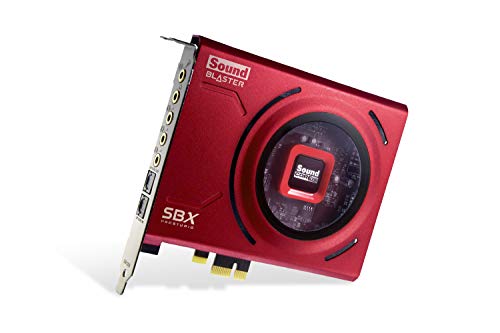 Creative Sound Blaster Z SE | Check price on Amazon | |
 Creative Sound Blaster Z | Check price on Amazon | |
 ASUS Xonar SE | Check price on Amazon |
Key takeaways
- Three internal PCIe sound cards with microphone inputs, compared for vocal recording and streaming by mic EQ, ASIO support, signal-to-noise ratio and headphone drive.
Disclosure: As an Amazon Associate, we earn from qualifying purchases.
Our top pick: Creative Sound Blaster Z SE. Runner-up: Creative Sound Blaster Z.
A sound card for vocals has a different job from a sound card bought for games or films. The playback side still matters, because the singer monitors through headphones while recording, but the deciding side is the input path: the microphone has to enter the PC through a clean analogue-to-digital stage, the driver has to keep latency low enough for live monitoring, and the software has to give some control over how the voice is shaped before it reaches the recording or the stream. All three cards in this guide are internal PCIe sound cards with a microphone input, and each one was checked against an Amazon US listing with a recorded ASIN.
One caution belongs at the front of this guide. The listing details for all three cards rest on secondary copies of their Amazon US listings rather than on a direct capture of each live page, so the figures below are stated as recorded and should be confirmed on the live listing before buying. This guide covers only these three verified models rather than padding the list with cards whose listings could not be corroborated. It also keeps strictly to internal sound cards: USB audio interfaces and headsets are different product types with different input paths, and none are mixed in here.
What the three cards share is the basic shape of the job. Each is a PCIe card that takes over both directions of audio from the motherboard: the microphone signal comes in through the card, and the headphone or speaker output leaves through the card. Each is specified at 24-bit and 192 kHz with a 116 dB signal-to-noise ratio as recorded, which puts the conversion stage well above the onboard audio found on most motherboards. Where they differ is in the vocal tools wrapped around that stage: one pairs microphone EQ with ASIO driver support, one bundles a beamforming microphone in the box, and one keeps the design simpler with a lower-powered headphone stage.
Quick Picks
- Creative Sound Blaster Z SE — Best for vocal recording and streaming: microphone EQ, voice morphing and ASIO support on top of a 116 dB signal-to-noise ratio, with a headphone amp rated for up to 600 ohms.
- Creative Sound Blaster Z — Best with a microphone included: a beamforming microphone in the box and the Sound Core3D processor, with the same 24-bit/192 kHz conversion and 600-ohm headphone drive.
- ASUS Xonar SE — Best simpler card: 5.1 PCIe card with a microphone input, 116 dB signal-to-noise ratio as recorded, and a headphone amp rated for up to 300 ohms.
Creative Sound Blaster Z SE
OUR TOP PICK
The Sound Blaster Z SE takes the top place in this guide because it is the only one of the three whose recorded feature set is aimed directly at the voice. As recorded from its listing copies, the card carries Mic EQ and voice morphing in its software, which are the two tools a vocalist or streamer reaches for first: the EQ shapes the microphone signal before it is recorded, lifting or trimming the parts of the voice that the room and the microphone handle badly, and the morphing is there for streamers who want character voices rather than their own. Neither tool exists on a plain playback card, and their presence here is what makes this a vocal card rather than a general one.
The second reason is driver support. The Z SE is recorded as supporting ASIO, which matters more for recording than any playback figure on the box. ASIO lets recording software talk to the card directly, keeping the delay between singing into the microphone and hearing the voice back in the headphones short enough to perform against. Without that low-latency path, a singer hears their own voice trailing behind the backing track, and timing drifts. For anyone recording vocals into a digital audio workstation rather than simply chatting, this is the feature that decides whether a card is usable at all.
The underlying hardware, as recorded, is a PCIe x1 card with 24-bit/192 kHz conversion and a 116 dB signal-to-noise ratio. That ratio is the figure to hold onto for vocals: it describes how far the wanted signal sits above the card’s own noise floor, and a quiet floor is what keeps soft passages and the gaps between phrases clean instead of hissy. The headphone amplifier is rated for up to 600 ohms, which covers the high-impedance studio headphones often used for monitoring, and the card supports discrete 5.1 output with virtual 7.1, plus Dolby Digital Live and DTS encoding for the playback side. A card bought for vocals still has to serve as the machine’s everyday audio output, and this one does not ask the owner to give that up.
Fitting is the usual internal-card routine. The machine needs a free PCIe x1 slot, or a longer slot that accepts the card, and the microphone and headphones connect at the back panel. Because the details above rest on secondary listing copies, confirm the slot format, the software features and the driver support on the live listing before ordering, particularly the Mic EQ and ASIO points, since those are the reasons for choosing this card over the others here.
Specs
– Model: 70SB150000004
– Interface: PCIe x1
– Conversion: 24-bit / 192 kHz, as recorded from the listing copies
– Signal-to-noise ratio: 116 dB, as recorded
– Driver support: ASIO, as recorded
– Voice features: Mic EQ and voice morphing, as recorded
– Headphone amp: rated for up to 600 ohms
– Output: discrete 5.1, virtual 7.1, Dolby Digital Live and DTS
Pros
– Mic EQ and voice morphing aimed directly at the vocal input
– ASIO support for low-latency monitoring while recording
– Headphone amp rated for up to 600-ohm studio headphones
Cons
– Listing details rest on secondary copies, so features need confirming on the live listing
– Internal card, so it suits desktop machines with a free PCIe slot only
Creative Sound Blaster Z
The Sound Blaster Z is the earlier card in the same family, and its distinguishing point for vocals is physical rather than digital: as recorded from its listing copy, it includes a beamforming microphone in the box. A beamforming microphone focuses on sound arriving from the direction of the person speaking and pays less attention to noise from elsewhere in the room, which suits a desk setup where the singer sits in a fixed position in front of the screen. For someone who does not already own a microphone and wants to record or stream from the desk without building a separate microphone setup, having the microphone bundled with the card removes a whole purchasing decision.
The card itself is built around Creative’s Sound Core3D processor, with 24-bit/192 kHz conversion and a 116 dB signal-to-noise ratio as recorded — the same conversion figures as the Z SE above. Its headphone amplifier is likewise rated for up to 600 ohms, so the monitoring side is equally well covered for high-impedance headphones. The microphone input path is there for owners who later move to a separate microphone of their own, at which point the bundled beamforming unit becomes the spare rather than the main input.
Where this card gives ground to the Z SE is in the vocal software. The recorded listing copy for the Z does not present the same Mic EQ and ASIO combination that defines the newer card, so a buyer whose priority is shaping the voice inside the card’s own software, or recording through an ASIO path in a workstation, should weigh the Z SE first. The Z is the more self-contained package: card, processor and microphone in one box, with the input and output stages handled together. Its listing details were captured from a regional Amazon copy rather than the US page, so, as with the other cards here, the included microphone and the figures above should be confirmed on the live US listing before buying.
Specs
– Model: SB1500
– Interface: PCIe
– Processor: Sound Core3D
– Conversion: 24-bit / 192 kHz, as recorded from the listing copy
– Signal-to-noise ratio: 116 dB, as recorded
– Included: beamforming microphone, as recorded
– Headphone amp: rated for up to 600 ohms
Pros
– Beamforming microphone included for desk-based vocal recording and streaming
– Sound Core3D processor with the same 116 dB signal-to-noise ratio as the newer card
– Headphone amp rated for up to 600-ohm headphones
Cons
– Recorded listing does not show the Mic EQ and ASIO pairing of the Z SE
– Listing copy captured was a regional one, so the bundle contents need confirming on the live US listing
ASUS Xonar SE
The Xonar SE is the simpler of the three cards, and its place in this guide is for the buyer who wants a proper internal card with a microphone input without paying for a vocal software suite. As recorded from its listing copies, it is a PCIe 5.1 sound card with hi-res playback at 192 kHz and 24-bit, a signal-to-noise ratio of 116 dB, and a headphone amplifier rated for up to 300 ohms. That headphone figure is the practical dividing line between this card and the two Creative models: 300 ohms still covers a wide range of headphones used for monitoring, but owners of high-impedance studio models at the top of the range are better served by the 600-ohm stages above.
For vocals, the honest summary is that the Xonar SE provides the input path rather than the vocal toolkit. A microphone connects through the card and benefits from the same class of conversion figures as the other cards here, but the recorded listing copy does not present dedicated microphone EQ or voice processing of the kind recorded for the Z SE. A singer who shapes the voice inside recording software, with its own EQ and effects, may not miss that; the card’s job in that setup is to deliver a clean signal and stay out of the way, and on the recorded figures it is equipped to do so. A streamer who wants the shaping done by the card itself should look at the first card in this guide instead.
A further caution applies to this card in particular. Its ASIN rests on mirror copies of the listing, and those copies were not fully consistent, so the model number and the figures recorded here should be checked carefully against the live listing before ordering: the card to look for is the Xonar SE, model 90YA00T0-M0UA00, a PCIe 5.1 card with a microphone input. If the live listing shows a different model or a card without the microphone input, it is not the product this guide describes.
Specs
– Model: 90YA00T0-M0UA00
– Interface: PCIe, 5.1 output
– Conversion: 192 kHz / 24-bit hi-res, as recorded from the listing copies
– Signal-to-noise ratio: 116 dB, as recorded
– Headphone amp: rated for up to 300 ohms
– Input: microphone input, as recorded
Pros
– Same 116 dB signal-to-noise class as the Creative cards, as recorded
– Microphone input on a straightforward 5.1 PCIe card
– Headphone amp covers headphones up to 300 ohms
Cons
– No dedicated vocal EQ or voice processing recorded for this card
– Listing copies were inconsistent, so the model and ASIN need careful checking on the live listing
How to Choose
Begin with the microphone path, because that is what separates a vocal card from a playback card. The microphone should enter through the card itself, and the figure that describes the cleanliness of that path is the signal-to-noise ratio: all three cards here are recorded at 116 dB, which is the level to expect from a card intended for recording rather than casual chat. A card that lists strong playback figures but says nothing about its input side is a card designed for listening, and vocals recorded through it will show that priority.
Next, consider how the voice will be shaped. There are two places EQ can live: in the sound card’s own software, applied before the signal reaches any application, or inside the recording software, applied track by track. Card-level EQ, such as the Mic EQ recorded for the Sound Blaster Z SE, has the advantage of applying everywhere at once — the same shaped voice goes to the recording, the stream and the voice call. Software-level EQ gives finer control per project but has to be set up in each application. Decide which way of working suits the setup, then choose the card that matches: the Z SE for shaping at the card, the Xonar SE for a clean feed into software that does the shaping.
Latency is the third check, and it is the one most often missed. When a singer monitors through the computer, the voice travels in through the card, through the software and back out to the headphones, and any delay in that round trip is heard as an echo that makes performing difficult. ASIO driver support, recorded for the Z SE, exists to keep that delay small. If the plan is to record into a workstation while listening back in real time, treat ASIO support as a requirement rather than a bonus; if the card will mostly feed a stream or calls, where monitoring through the PC is less central, it matters less.
Then match the headphone amplifier to the headphones actually used for monitoring. The two Creative cards are rated for up to 600 ohms, the Xonar SE for up to 300 ohms. Most everyday and mid-range studio headphones fall comfortably inside either figure, but high-impedance models need the stronger stage to reach a healthy listening level without strain. Check the impedance of the headphones on hand before choosing, since this is a fixed hardware limit that no software setting can change afterwards.
Finally, confirm the practicalities. Every card here is an internal PCIe model, so the machine must be a desktop with a free PCIe slot of the right size, and there is no version of this upgrade for a laptop. And because the listings behind this guide were corroborated through secondary copies, treat the live listing as the final word on model number, slot format, included accessories and software features for whichever card is chosen — particularly for the Xonar SE, where the copies behind its ASIN disagreed.
FAQs
Can an internal sound card replace a USB audio interface for recording vocals?
For a single microphone recorded at a desk, it can cover much of the same ground: the three cards here each provide a microphone input, conversion at 24-bit/192 kHz as recorded, and a headphone output for monitoring. An interface remains the more flexible tool for multiple microphones, instruments or balanced connections. The sound card route suits a fixed desktop setup with one voice, especially where the card’s own software, such as the Mic EQ on the Sound Blaster Z SE, does the shaping.
Why does ASIO support matter for singing?
Because of monitoring delay. When recording software works through a card’s ASIO driver, the path between the microphone and the headphones stays short enough that the singer hears their voice in time with the backing track. Through a slower driver path, the voice arrives noticeably late, which pushes timing off and makes sustained notes hard to judge. Of the cards in this guide, ASIO support is recorded for the Sound Blaster Z SE, which is one reason it leads the list for recording work.
Do these cards work in a laptop or a small desktop without a spare slot?
No. All three are internal PCIe cards that sit in an expansion slot on a desktop motherboard and present their microphone and headphone connections at the back of the case. A laptop has no such slot, and a compact desktop with every slot occupied has nowhere to put one. In those situations the internal sound card category does not apply at all, and a different product type would be needed instead.
Conclusion
For vocals, the Creative Sound Blaster Z SE is the top pick in this guide: it is the card whose recorded features — Mic EQ, voice morphing and ASIO support over a 116 dB signal-to-noise ratio — are aimed at the input side rather than only at playback. The Creative Sound Blaster Z is the runner-up for anyone who wants the microphone in the box, with its bundled beamforming microphone and Sound Core3D processor. The ASUS Xonar SE suits the buyer who wants a clean internal card with a microphone input and plans to shape the voice in software. Whichever card is chosen, confirm the model, the ASIN and the recorded figures on the live Amazon US listing before ordering, since the listings behind all three cards rest on secondary copies.