Our Short List of 3
All 3 Picks at a Glance
| Product | Specs | Action |
|---|---|---|
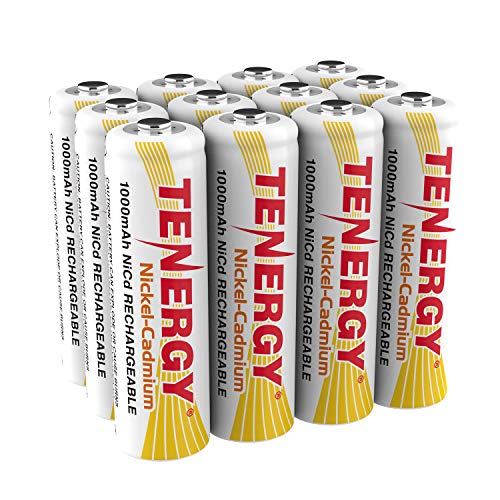 1. Tenergy AA NiCd 1000 mAh, 12-Pack | Check price on Amazon | |
 2. Tenergy Premium AA NiCd 1100 mAh, 8-Pack | Check price on Amazon | |
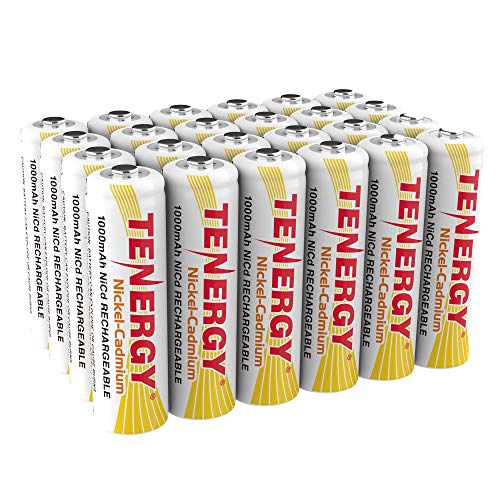 5. Tenergy AA NiCd 1000 mAh, 24-Pack | Check price on Amazon |
Key takeaways
- What is nickel cadmium battery chemistry? A 1.2-volt rechargeable cell with a memory effect and a cadmium core. Here is how it works and where it fits.
Disclosure: As an Amazon Associate, this site may earn from qualifying purchases made through links on this page.
Intro
What is nickel cadmium battery chemistry? A nickel-cadmium battery, usually written NiCd or Ni-Cd, is a rechargeable battery whose positive plate is nickel oxide hydroxide and whose negative plate is cadmium, with a potassium hydroxide electrolyte between them. Each cell gives 1.2 volts, it can be recharged hundreds of times, and it holds up under abuse that would shorten the life of many other rechargeable chemistries: deep discharge, long storage, cold weather, and rough charging.
The chemistry is old. Swedish engineer Waldemar Jungner patented the nickel-cadmium cell in 1899, and the design reached the mass market in the middle of the twentieth century, when it powered the first cordless tools, the first portable phones, and the first emergency lighting systems. For decades, NiCd was the default rechargeable battery in the world, and an entire generation of devices was built around its 1.2-volt cell.
Then two things changed. Nickel-metal hydride, written NiMH, arrived with more capacity in the same size and without cadmium, and lithium-ion arrived with far more energy in a smaller package. Cadmium is toxic, and regulators in Europe and elsewhere restricted its use in consumer batteries, which pushed NiCd out of most everyday devices. Yet NiCd never disappeared. It still powers solar garden lights, emergency lights, cordless phones, medical devices, aviation batteries, and industrial backup systems, because no other common chemistry tolerates the same punishment at the same low voltage. The picks below are all AA nickel-cadmium batteries, the size that still sells in the largest numbers, and every pick was confirmed live on Amazon US at the time of writing. Nothing here is a claim from practical use; the facts come from the listings themselves and from general battery knowledge.
At a Glance
| Fact | Nickel-cadmium |
|---|---|
| Cell voltage | 1.2 volts nominal |
| Positive plate | Nickel oxide hydroxide |
| Negative plate | Cadmium |
| Electrolyte | Potassium hydroxide |
| Capacity in AA size | 600 to 1100 mAh in the picks below |
| Typical cycle life | Hundreds of full cycles, often quoted near 1000 |
| Self-discharge | Roughly one tenth per month at room temperature |
| Memory effect | Yes, real for NiCd, and the reason for full discharge cycles |
| Main drawback | Cadmium is toxic, and capacity is lower than NiMH in the same size |
| Still used in | Solar lights, emergency lighting, cordless phones, power tools, aviation, medical devices |
The five picks cover the live NiCd market in AA size: two Tenergy lines, one at 1000 mAh and one premium line at 1100 mAh, and one GEILIENERGY line at 600 mAh, in pack sizes from 8 to 24 cells. Pack size is the real selection variable here, because the market for new NiCd cells is narrow and the same cell lines recur in different counts.
How to Choose
The first decision is size, and for most buyers it is already made. AA is the size in nearly every solar garden light, the size in most cordless phones that still take replaceable cells, and the size this guide covers. A NiCd cell is 1.2 volts, while a standard alkaline AA is 1.5 volts, and that gap confuses buyers. Devices made for rechargeable cells expect 1.2 volts and run normally on it. Devices made only for alkaline cells may run dim or refuse to work, and the fix is not a different NiCd cell but a device made for rechargeables.
Capacity is the second decision, and it is measured in milliamp-hours, written mAh. A 600 mAh cell holds less charge than a 1000 mAh cell, so it runs a solar light for fewer hours per night, but it also charges fully on a weaker solar panel, and a large pack of small cells is the lower outlay of the two. A 1100 mAh cell runs longest of the three lines in this guide, and it suits a light with a large panel or a device that draws a steady current for hours. Capacity figures in this guide are the listings’ stated figures, and a buyer should compare them within one brand line rather than across brands, because stated figures are not measured the same way by every seller.
The memory effect is the part of NiCd that most buyers have heard of, and it is real. When a NiCd cell is recharged again and again after only a shallow discharge, it can develop a voltage dip at the point where charging habitually began, and the device then behaves as if the cell is empty earlier than it should. The effect is reversible: a full discharge followed by a full charge, repeated a few times, usually restores the lost capacity. Solar lights discharge their cells fully every night, which is one reason NiCd survives so well in that job. A buyer who tops up a NiCd cell every evening after light use should run a full discharge cycle now and then, or simply let the device run the cell down on its own schedule.
Charging is the third decision. NiCd cells charge on any charger made for NiCd or for NiMH, and most modern AA chargers cover both chemistries. A solar light is itself a NiCd charger, with a small panel and a simple circuit. A buyer should not charge NiCd cells on a charger made only for lithium-ion, and should not mix NiCd cells with NiMH or alkaline cells in the same device, because the chemistries discharge at different rates and the weakest cell then carries the load alone. Mixing old and new cells in one device is the same mistake: the old cell empties first, and the device stops while the new cells still hold charge.
Cadmium is the fourth consideration, and it is the reason NiCd left the mainstream. Cadmium is toxic, and a NiCd cell must never go into household waste or a fire. Every NiCd cell in this guide should go to a battery recycling point at the end of its life, and a leaking or swollen cell should be handled with gloves and bagged before disposal. The cadmium is also the reason NiCd keeps working where other chemistries quit: cadmium plates tolerate deep discharge and overcharge far better than the alternatives, which is why aviation and emergency systems still specify it.
The fifth consideration is the market itself. New NiCd cells are a narrow market now, and the listings are dominated by a small number of brands and cell lines. A buyer who wants a different brand for its own sake will search a long time. The honest way to choose is by capacity and pack size: how many cells the job needs, and how much run time each night or each use requires.
The Picks
1. Tenergy AA NiCd 1000 mAh, 12-Pack
The Tenergy 1000 mAh twelve-pack is the reference NiCd cell in this guide: a standard AA nickel-cadmium cell, 1.2 volts, 1000 mAh, sold in a pack of twelve. The listing names the cell for solar lights and garden lights, which is the job most NiCd cells do today, and the detail table confirms the cell type as NiCAD, so there is no ambiguity about the chemistry. Twelve cells covers a full set of solar path lights with spares left over, and 1000 mAh is the middle capacity in this guide.
Tenergy is the most established name still selling NiCd cells on Amazon US, and this listing is the one other NiCd listings are measured against. The cells are unprotected, as AA NiCd cells always are, and they charge on any NiCd or NiMH AA charger. A buyer replacing the cells in a dozen solar lights should expect the same fit and the same voltage as the cells that came with the lights, because AA NiCd is a standard size and the solar light was designed around it.
Tenergy AA NiCd 1000 mAh 12-Pack
2. Tenergy Premium AA NiCd 1100 mAh, 8-Pack
The Tenergy Premium eight-pack is the high-capacity pick in this guide: the same AA size and 1.2 volts, but 1100 mAh per cell, which is the largest stated capacity among the picks. The listing calls the line premium, and the detail table confirms the cell type as NiCAD with an 1100 mAh capacity, so the extra capacity is a listing fact rather than a guess. Eight cells is the right count for a smaller set of lights or for a device that takes four or eight cells at a time.
The trade is count against capacity. Eight premium cells hold more charge per cell than twelve standard cells hold per cell, but the pack covers fewer devices. A buyer with four solar lights that run all night should take the premium eight-pack, because run time per light is the limit. A buyer with twelve lights should take the standard twelve-pack instead, because count is the limit. Both are Tenergy cells, so brand is not the difference; capacity and count are.
Tenergy Premium AA NiCd 1100 mAh 8-Pack
3. GEILIENERGY AA NiCd 600 mAh, 8-Pack
The GEILIENERGY eight-pack is the low-capacity, low-commitment pick: AA nickel-cadmium, 1.2 volts, 600 mAh per cell, in a pack of eight. The detail table confirms the cell type as NiCAD, and the listing names solar lamps and garden lights as the intended job. A 600 mAh cell charges fully on a small solar panel that might never fill a 1000 mAh cell on a short winter day, which is a genuine advantage in a shaded garden, and it runs a small light for a full night all the same.
The brand is generic, and the listing is thinner than the Tenergy listings, with fewer published details beyond size, voltage, and capacity. That is normal for the low end of this market. A buyer who wants the lowest outlay for a first try at NiCd solar cells, or who needs cells for lights with small panels, should take this pack. A buyer who wants the longest run time per night should take one of the higher-capacity Tenergy picks instead.
GEILIENERGY AA NiCd 600 mAh 8-Pack
4. GEILIENERGY AA NiCd 600 mAh, 20-Pack
The GEILIENERGY twenty-pack is the same 600 mAh cell as the eight-pack above, in a pack of twenty. Same size, same 1.2 volts, same stated capacity, same brand, and the detail table confirms the cell type as NiCAD. The only difference is count, and count is the whole point: twenty cells covers a full garden of solar lights in one order, with spares for the lights that fail first.
Two packs of the same cell line in one guide is deliberate, because pack size is the selection variable in the NiCd market. A buyer with a dozen or more lights should compare the per-cell arithmetic of the eight-pack against the twenty-pack and buy the count the garden actually needs, rather than buying two eight-packs and paying for the extra packaging twice. The same caution applies as for the eight-pack: generic brand, thin listing, stated capacity taken as stated.
GEILIENERGY AA NiCd 600 mAh 20-Pack
5. Tenergy AA NiCd 1000 mAh, 24-Pack
The Tenergy twenty-four-pack is the same 1000 mAh cell as the twelve-pack that opens this guide, in a pack of twenty-four. Same AA size, same 1.2 volts, same 1000 mAh, same Tenergy brand, and the detail table confirms the cell type as NiCAD. Twenty-four cells is the bulk buy for a large install, a landlord with many path lights, or a buyer who replaces solar cells every year or two and wants a stock on the shelf.
The twelve-pack and the twenty-four-pack are the same cell, so the buyer should not treat them as two different batteries. Choose by count: twelve for a single garden, twenty-four for a large one. The twenty-four-pack is also the pick for a buyer who wants one order to cover several seasons of replacements, since NiCd cells store well when kept cool and dry and charged now and then.
Tenergy AA NiCd 1000 mAh 24-Pack
Comparison Table
| Pick | Capacity | Cell type | Count | Brand |
|---|---|---|---|---|
| Tenergy 12-Pack | 1000 mAh | NiCd | 12 | Tenergy |
| Tenergy Premium 8-Pack | 1100 mAh | NiCd | 8 | Tenergy |
| GEILIENERGY 8-Pack | 600 mAh | NiCd | 8 | GEILIENERGY |
| GEILIENERGY 20-Pack | 600 mAh | NiCd | 20 | GEILIENERGY |
| Tenergy 24-Pack | 1000 mAh | NiCd | 24 | Tenergy |
All five picks are AA size, 1.2 volts, rechargeable nickel-cadmium cells. Capacity figures are the listings’ stated figures.
Which One Fits Your Situation
For a first set of solar lights, the Tenergy 1000 mAh twelve-pack is the pick. It is the middle capacity, the established brand, and the count that covers a normal garden. For a smaller set of lights that must run all night, the Tenergy Premium 1100 mAh eight-pack is the pick, because capacity per cell is the limit, not count.
For a shaded garden with small solar panels, the GEILIENERGY 600 mAh eight-pack is the pick. A smaller cell fills fully on a weak panel, and a full small cell beats a half-charged large cell every night. For a large garden, the GEILIENERGY twenty-pack or the Tenergy twenty-four-pack is the pick, and the choice between them is capacity against count: 600 mAh across twenty lights, or 1000 mAh across twenty-four.
For a buyer who simply wants spares on the shelf, the Tenergy twenty-four-pack is the pick. NiCd cells keep well in storage when kept cool and dry, and a bulk pack means the next dead solar cell is a two-minute swap rather than another order.
FAQ
What is nickel cadmium battery chemistry?
A nickel-cadmium battery is a rechargeable cell with a nickel oxide hydroxide positive plate, a cadmium negative plate, and a potassium hydroxide electrolyte. Each cell gives 1.2 volts. It can be recharged hundreds of times, it tolerates deep discharge and cold weather, and it shows a memory effect when it is recharged again and again after only shallow use.
What is the memory effect?
The memory effect is a voltage dip that appears when a NiCd cell is repeatedly recharged after only a shallow discharge. The cell then behaves as if it is empty earlier than it should be, at the point where charging habitually began. A full discharge followed by a full charge, repeated a few times, usually restores the lost capacity. Solar lights avoid the effect on their own, because they discharge their cells fully every night.
Can I use NiCd batteries instead of alkaline AA batteries?
Only in devices made for rechargeable cells. A NiCd cell is 1.2 volts while an alkaline AA is 1.5 volts, so a device made only for alkaline cells may run dim or not at all. Solar lights, cordless phones, and other devices built for rechargeables expect 1.2 volts and run normally on NiCd. Never mix NiCd cells with alkaline or NiMH cells in the same device.
How long do NiCd batteries last?
A NiCd cell typically survives hundreds of full charge cycles, often quoted near 1000, and several years of service in a solar light. Heat, overcharging, and long storage at full charge shorten that life, while cool storage and regular full discharge cycles lengthen it. A cell that no longer holds a charge through the night has reached the end of its useful life and should be recycled.
Are NiCd batteries safe?
In normal use, yes, with one condition: cadmium is toxic, so a NiCd cell must never go into household waste, a fire, or a landfill bin. Take dead cells to a battery recycling point. A leaking cell should be handled with gloves, bagged, and taken to the same point. Keep NiCd cells away from children, and never puncture or incinerate one.
Why do solar lights still use NiCd?
Solar lights use NiCd because the chemistry fits the job. The cells discharge fully every night and recharge every day, which is exactly the cycle NiCd tolerates best. They work in cold weather, they survive years of daily cycling, and they are inexpensive enough to replace across a whole garden. NiMH holds more charge per cell, but it carries a higher outlay and ages more quickly under the same daily deep cycling, so NiCd keeps its place in the garden.
Final Take
A nickel cadmium battery is a 1.2-volt rechargeable cell built from nickel oxide hydroxide and cadmium, old in design and still at work in solar lights, emergency lighting, and industrial systems because it tolerates deep discharge, cold, and rough treatment better than the chemistries that replaced it in everyday devices. Its limits are real too: lower capacity than NiMH in the same size, a genuine memory effect, and a toxic metal that demands proper recycling.
Among the picks, the Tenergy 1000 mAh twelve-pack is the balanced choice for a normal garden, the Tenergy Premium 1100 mAh eight-pack is the choice for the longest run per night, and the GEILIENERGY 600 mAh packs are the choice for shaded gardens and large installs where count matters more than capacity. Whichever pack fits, the rule is the same: match the size, respect the 1.2 volts, recycle the cell when its nights run short, and let the sun do the charging.